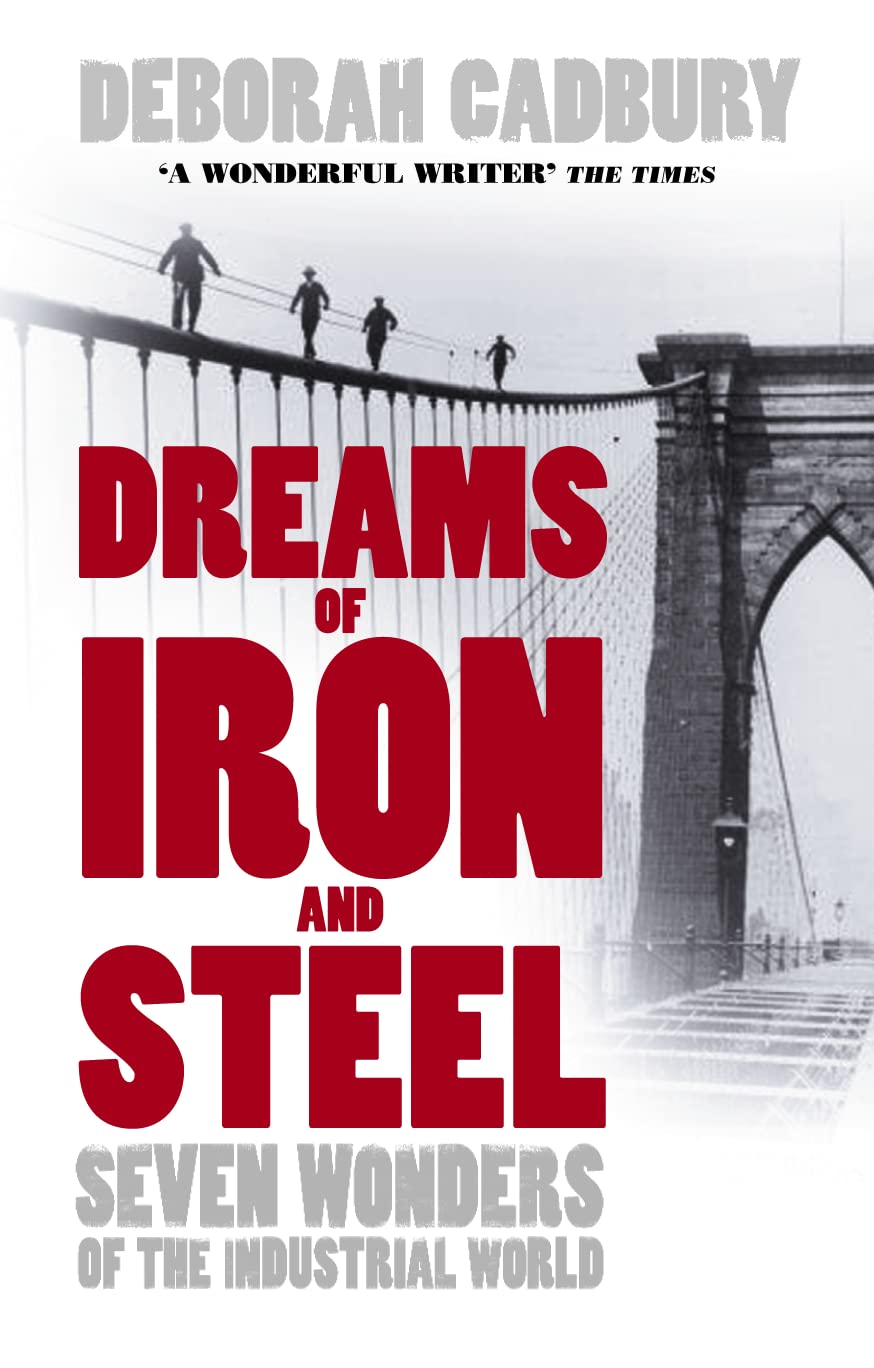
A world that had changed little from the Middle Ages was altered beyond recognition by the engineering genius of the nineteenth century:rivers tamed, oceans pacified, continents bridged. In Dreams of Iron and Steel, acclaimed historian Deborah Cadbury tells the heroic tale of the visionaries and ordi-nary workers who brought to life seven wonders of engi-neering that still have the power to awe and inspire us today. From the London sewers that banished cholera to the Panama Canal that shaved thousands of miles off a dangerous sea passage, from the Hoover Dam that diverted the world's most unpredictable river to give power to over half of the country to the transcontinental railroad that fulfilled the dream of manifest destiny, Dreams of Iron and Steel reveals the epic struggles and personal stories of the most brilliant pioneers of the industrial age, and the financiers and politicians who hung on for the ride as fortunes and reputations were lost and won. Fueled by Deborah Cadbury's characteristic scholarship and insight, this extraordinary chronicle re-createsthe human odyssey of how our modern world was forged -- with rivets, grease, and steam, but also with blood, sweat, and extreme imagination. The lengthy subtitle tells the story of this fascinating look at technological triumphs in the nineteenth century. (The book complements a five-part television series scheduled to air in 2004 on the Learning Channel.) Cadbury begins with the story of the largest oceangoing vessel in the history of the world, the Great Eastern, which was envisioned by its creator as "a floating city, majestic by day and a brilliant mirage at night," a ship that would carry 4,000 passengers across the seas. It was a mammoth project with massively disappointing results, but the Great Eastern was indeed a wonder. Other nineteenth-century wonders, such as Hoover Dam, the Panama Canal, and the North American transcontinental railroad, proved more successful, but what all seven wonders have in common is this: they were born of big ideas. The nineteenth century, Cadbury emphasizes, was the dividing line between the old world and the new, between a world that hadn't changed much in centuries and one in which rapid change, especially in technology, would become a way of life. David Pitt Copyright © American Library Association. All rights reserved “A fascinating look at the technological triumphs of the in the nineteenth century.” (Booklist) “Cadbury has a knack for providing interesting asides…an engaging and informative read.” ( San Francisco Chronicle ) “Engrossing...DREAMS OF IRON AND STEEL celebrates the triumphs not just of engineering but of the questing human spirit.” (Stephen Fox, author of Transatlantic) “An engaging and informative read.” (San Francisco Chronicle) Deborah Cadbury is the highly acclaimed author of several books, including Dreams of Iron and Steel, The Lost King of France, and Terrible Lizard . She has also won numerous international awards as a television producer for the BBC. She lives in London.