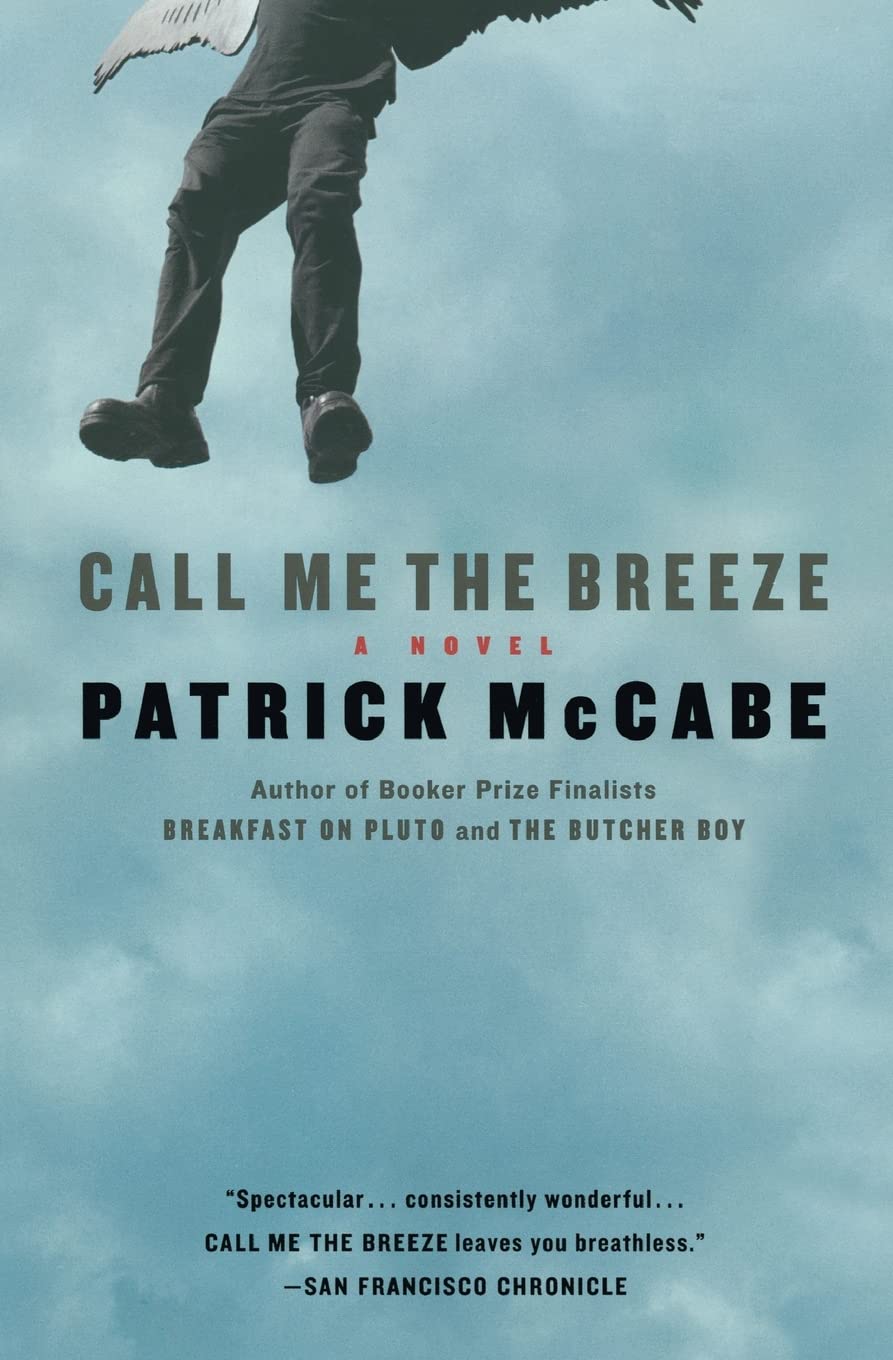
With T. S. Eliot's words as his guide, Joey Tallon embarks on a journey toward enlightenment in the troubling psychedelic-gone-wrong atmosphere of the late 1970s. A man deranged by desire, and longing for belonging, Tallon searches for his"place of peace" -- a spiritual landscape located somewhere between his small town in Northern Ireland and Iowa ... and maybe between heaven and hell. “A weepingly explosive take on that most distressful border between two unstoppable political realities.” - Gaurdian (London) “McCabe’s deliciously warped wit is as razor-sharp as ever.” - Publishers Weekly (starred review) “Patrick McCabe’s brilliant new tragicomic picaresque Call Me the Breeze…is close―very close―to being a masterpiece.” - Salon “Brilliant.” - Salon “McCabe’s raw prose … and flawed but likeable characters make for a hilarious novel.” - Maxim “Stunningly beautiful language” - Boston Globe “By turns fascinating, repulsive, heartbreaking … [this] tale by the celebrated Irish author is a harrowing experience.” - Kirkus Reviews “Spectacular…consistently wonderful…[Call Me the Breeze] leaves you breathless.” - San Francisco Chronicle With T. S. Eliot's words as his guide, Joey Tallon embarks on a journey toward enlightenment in the troubling psychedelic-gone-wrong atmosphere of the late 1970s. A man deranged by desire, and longing for belonging, Tallon searches for his"place of peace" -- a spiritual landscape located somewhere between his small town in Northern Ireland and Iowa ... and maybe between heaven and hell. Patrick McCabe was born in Clones, County Monaghan, Ireland, in 1955. His other novels include The Butcher Boy , The Dead School, and Call Me the Breeze . With director Neil Jordan, he co-wrote the screenplay for the film version of The Butcher Boy . Call Me the Breeze By McCabe, Pat Perennial ISBN: 0060523891 Chapter One The End ... ... is the beginning -- that's what the ancients say. Well, we'll see. But first of all I want to get the rest of this stuff out of the way and leave it exactly as I found it for Bonehead. 'You can't be a famous writer and go throwing your papers around you like that,' he says. And he's right, I guess. But he might as well be talking to the wall. I've always been that way. As soon as I was finished writing anything, I'd just shove it into a bag. A Leatherette Holdall ... ... to be precise. That's where he found nearly all of the material. 'Give me that!' he says. 'Till I put some order on it once and for all!' So I did. 'There you are!' I says. 'It's all yours, Bone! You can do what you like with it, for all the difference it makes to me!' He spent about a month on it, beavering away in his room. When he was finished, he presented it to me: 'The magnificent Joey Tallon Archibe!' he says. But there could be no doubt about it -- he really had done a terrific job. In place of the leatherette holdall, a neat little stack of marbled box files containing all my notebooks and ledgers. I've had a really good time going through it. And if I was any kind of writer at all, I'd have made something worthwhile out of it, instead of just sitting here rambling half the night, filling up pages with discursive nonsense. I mean, it's not as if enough didn't happen! Particularly during the seventies, when the old leatherette holdall found itself very much favoured -- particularly by anonymous men who had a predilection for leaving it behind them in crowded public houses. Campbell Morris Although somehow you always felt that in a small border town like Scotsfield nothing serious would ever really happen. That most of what you heard was talk and would never amount to anything much. But that was before the 'Campbell Morris Incident'. Campbell was a salesman who happened to drop by for the Lady of the Lake festival but ended up getting himself killed. It's impossible to say who started the rumours about him. Either way it ended with him being pulled out of the reservoir and the cops going apeshit, raiding pubs.It wasn't my business. I was too busy getting on with my life, pulling pints and thinking about Jacy. She was all I ever thought about in those days. 'He was a fucking spy! And that's it!' you'd hear them shouting late at night, full of guilt over what they had done. There had been six or seven of them involved, I think. 'How about we go out to The Ritzy?' they'd said, as the salesman drunkenly grinned. 'You'll see things out there that you'd never come across in Dublin or London.' It was a ruse, to get him on his own. They used to show all these blue movies in a barn way out the country. They had dubbed it 'The Ritzy' and for a tenner you could watch the films and drink all you wanted. There was talk of Boyle Henry and the Provos being involved in its operation, but you'd never say that openly. 'I couldn't tell you anything about The Ritzy' was what you said if you were asked. 'I know nothing at all about any of that' -- that's what you were expected to say.