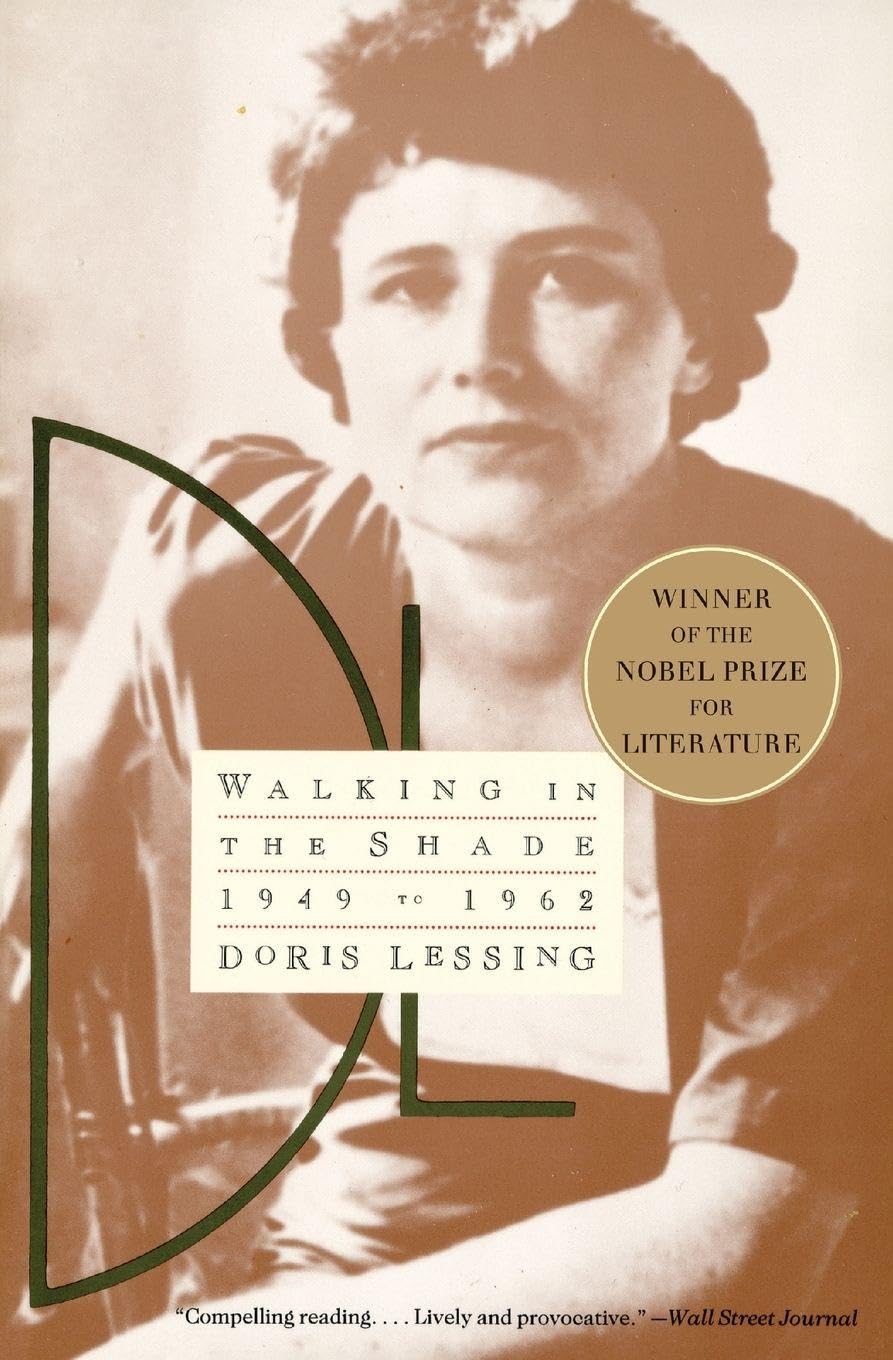
"The life she describes is heroic...yet astonishingly full, with political work, writing, friendships, lovers and travel."— San Francisco Chronicle The second volume of Doris Lessing's extraordinary autobiography, a landmark literary memoir, covers the years 1949-62, from her arrival in post-war London with her son, Peter, and the manuscript for her first novel, The Grass is Singing, under her arm to the publication of her most famous work of fiction, The Golden Notebook. She describes how communism dominated the intellectual life of the Cold War era 1950s and how she, like nearly all communists, experienced a deep disillusionment with extreme and rhetorical politics and left communism behind. Evoking the bohemian lifestyle of a young writer and single mother, Lessing speaks openly about her writing process, her friends and lovers, her involvement in the theater, and her political activities. Walking in the Shade is an invaluable social history as well as Doris Lessing's Sentimental Education. Lessing holds nothing back in this unflinching account of her transformation—from idealistic communist to literary icon. A Writer’s Life: Lessing details the creative process behind her groundbreaking novels, from carrying the manuscript of The Grass Is Singing to London to the explosive publication of The Golden Notebook . - Leaving the Party: A raw, firsthand account of the intellectual and political fervor of the 1950s, and why she and so many others ultimately walked away from communism. - A Woman’s Independence: An intimate look at her life as a single mother in a new city, navigating friendships, love affairs, and the vibrant theater scene of the era. - An Unsentimental Self-Portrait: With the candid, analytical eye that defines her fiction, Lessing examines her own past, her complicated family relationships, and her journey to become one of the most important writers of the 20th century. "There is heartbreak galore in this book (although there is much that is exciting and good, too)." - Los Angeles Times Book Review "Justifies by her extraordinary variety of her achievements, her exceptional memory and her facility as a writer." - New York Times Book Review "The life she describes is heroic...yet astonishingly full, with political work, writing, friendships, lovers and travel." - San Francisco Chronicle "The story couldn't be better told. She is there, marvelously urgent, translucently sincere--Doris Lessing in person." - Washington Post Book World "You can't help but admire her independence of thought and feeling and her willingness to overturn all the precepts upon which her very existence has been predicted." - Los Angeles Times Book Review The second volume of Doris Lessing's extraordinary autobiography covers the years 1949-62, from her arrival in war-weary London with her son, Peter, and the manuscript for her first novel, The Grass is Singing, under her arm to the publication of her most famous work of fiction, The Golden Notebook. She describes how communism dominated the intellectual life of the 1950s and how she, like nearly all communists, became disillusioned with extreme and rhetorical politics and left communism behind. Evoking the bohemian days of a young writer and single mother, Lessing speaks openly about her writing process, her friends and lovers, her involvement in the theater, and her political activities. Walking in the Shade is an invaluable social history as well as Doris Lessing's Sentimental Education. Winner of the 2007 Nobel Prize in Literature, Doris Lessing was one of the most celebrated and distinguished writers of our time, the recipient of a host of international awards. She wrote more than thirty books—among them the novels Martha Quest, The Golden Notebook, and The Fifth Child . She died in 2013. "The story couldn't be better told. She is there, marvelously urgent, translucently sincereDoris Lessing in person." Walking in the Shade Volume Two of My Autobiography--1949-1962 By Lessing, Doris May Perennial Copyright © 2004 Doris M. Lessing All right reserved. ISBN: 0060929561 Chapter One Denbigh Road W11 High on the side of the tall ship, I held up my little boy and said, 'Look, there's London.' Dockland: muddy creeks and channels, greyish rotting wooden walls and beams, cranes, tugs, big as and little ships.The child was probably thinking, But ships and cranes and water was Cape Town, and now it's called London.As for me, real London was still ahead, like the beginning of my real life, which would have happened years before if the war hadn't stopped me coming to London.A clean slate, a new page--everything still to come. I was full of confidence and optimism, though my assets were minimal: rather less than 150; the manuscript of my first novel, The Grass Is Singing, already bought by a Johannesburg publisher who had not concealed the fact he would take a long time publishing it, because it was so subversive; and a few s