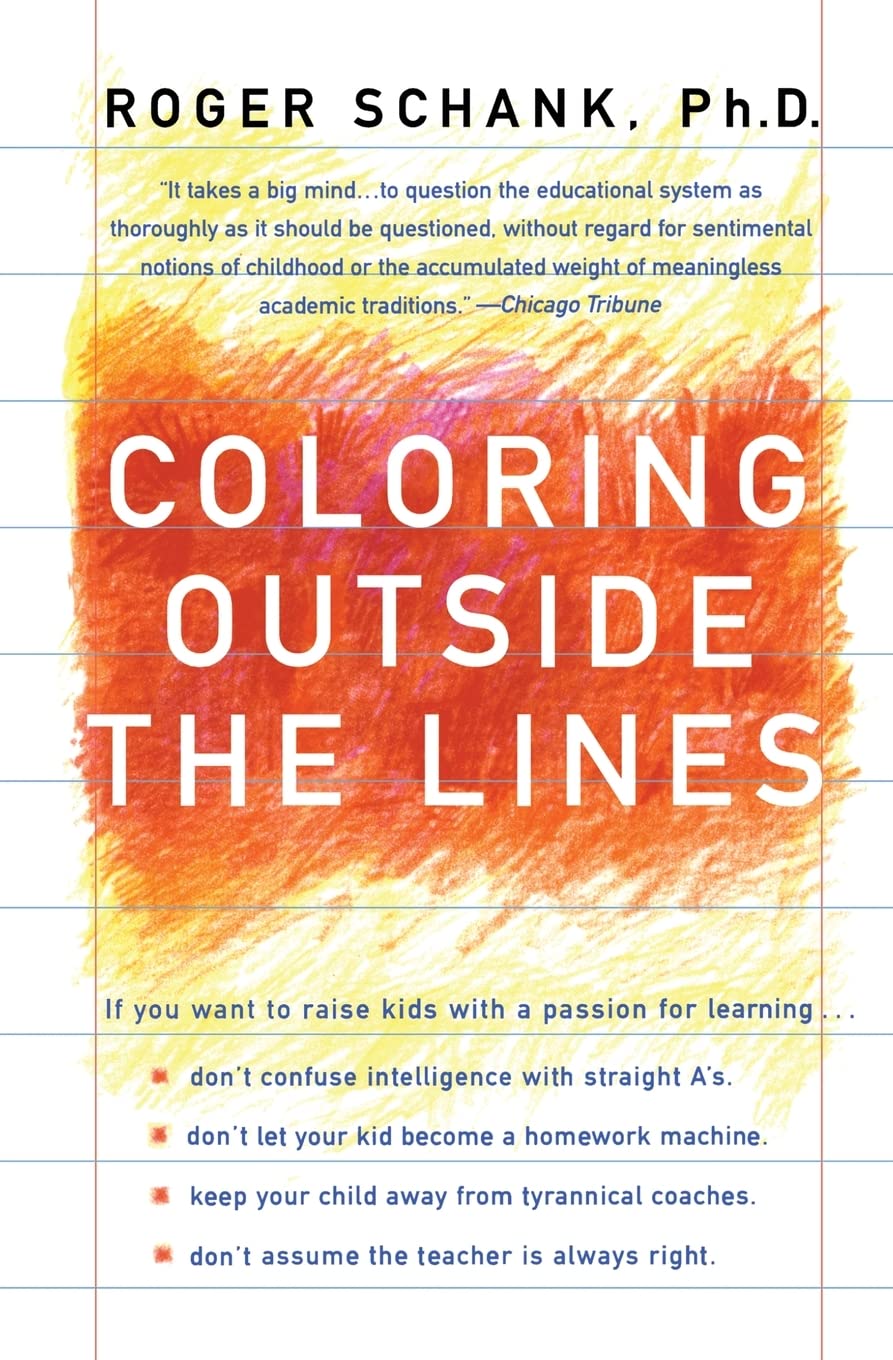
A myth shattering prescription for raising intellectually engaged, self-starting kids "I am writing this book because I am horrified by what schools are doing to children." So begins this controversial and enlightened book by Roger Schank, Ph.D., a world-renowned expert on teaming, who believes that every day of the school year our children are being failed by an academic system that does nothing to stir a lifelong passion for learning. In this lively, sometimes alarming book, Schank shatters the myths about how children learn and offers candid advice for parents who want to raise kids with gumption, ambition, creativity, inquisitiveness, and analytic and verbal proficiency. “[The] book's real service to parents is providing an authority that encourages dissent, challenge, and idiosyncracy.” - Chicago Tribune So begins this controversial and enlightened book by Roger Schank, Ph.D., a world-renowned expert on teaming, who believes that every day of the school year our children are being failed by an academic system that does nothing to stir a lifelong passion for learning. In this lively, sometimes alarming book, Schank shatters the myths about how children learn and offers candid advice for parents who want to raise kids with gumption, ambition, creativity, inquisitiveness, and analytic and verbal proficiency. Roger Schank is the founder and director of Northwestern University's prestigious Institute for the Learning Sciences. Before joining the faculty of Northwestern, Schank was th director of the Yale University Artificial Intelligence Project. A prolific scholar in his field, he is also, as chairman and chief technology officer for Cognitive Arts Corporation, a respected consultant to many Fortune 500 companies and the U.S. government. Coloring Outside the Lines By Schank, Roger Quill Copyright © 2004 Roger Schank All right reserved. ISBN: 0060930772 Chapter One What Is a Smarter Kid? "SMART" is a relative term. School smarts are different from street smarts; the nerdy science genius and the savvy gang leader demonstrate distinctly different abilities, but they are both smart. Or think about where the boundary of intelligence ends and natural talent begins: Was Michael Jordan a smart basketball player or a talented one? It's also instructive to note that some of the most brilliant people do some of the stupidest things. I have a friend who refers to people who are so smart they can't function as suffering from "200 IQ disease." A book by Howard Gardner called Multiple Intelligences proposes that there are myriad forms of intelligence -- musical intelligence, athletic intelligence, and so on. In Gardner's view, many people are intelligent in some way, and so the term "intelligence" becomes virtually meaningless. In this politically correct view of intelligence, most of us are smart at something. Even the educational system's definition of intelligence is relative. Its definition of smart-getting straight A's -- is often an indicator of hard work and conformity rather than massive intelligence. We all know students who receive great grades because they are diligent and give teachers what they want; we also know other students who have brain power to spare but receive worse grades because of their indifference, eccentricity, and rebelliousness. While straight A students might actually be quite intelligent, many waste much of their intellect on doing what they're told rather than on exploring their own interests. These people are smart, but they're smart without intellectual passion and original thinking. "Smart" becomes an even more problematic issue when we factor in genetics.The grand dream of teachers is to take a person who seems hopeless and turn him into a rocket scientist. Or if they can't make that 180-degree transformation, they can at least strive for the more modest goal of taking kids with average intelligence and turning them into college professors. Is this a pipe dream? What about the blue-collar kid with the low IQ who grows up to be a highly successful auto parts entrepreneur? Is he smart about selling auto parts and stupid about everything else? Given these questions, I would ask that you consider another definition of smart besides the one schools mandate. Smart Is As Smart Does Here is what I mean and don't mean by "smarter kid." First, I don't mean you can turn a dummy into an intellectual dynamo. Excuse my bluntness, but it's important to be clear about the issue of genetics. Like it or not, some kids are born with superior intellects. This is Just the way things are, and if you happen to have a child who was not blessed with a great mind and you hope this book will turn him into the next Einstein, stop reading now. If, however, you have a reasonably bright child, then you can help him become smarter by developing six real world abilities: Verbal proficiency. Every parent can help his children learn to speak more convincingly and eloquently. Most kids aren'