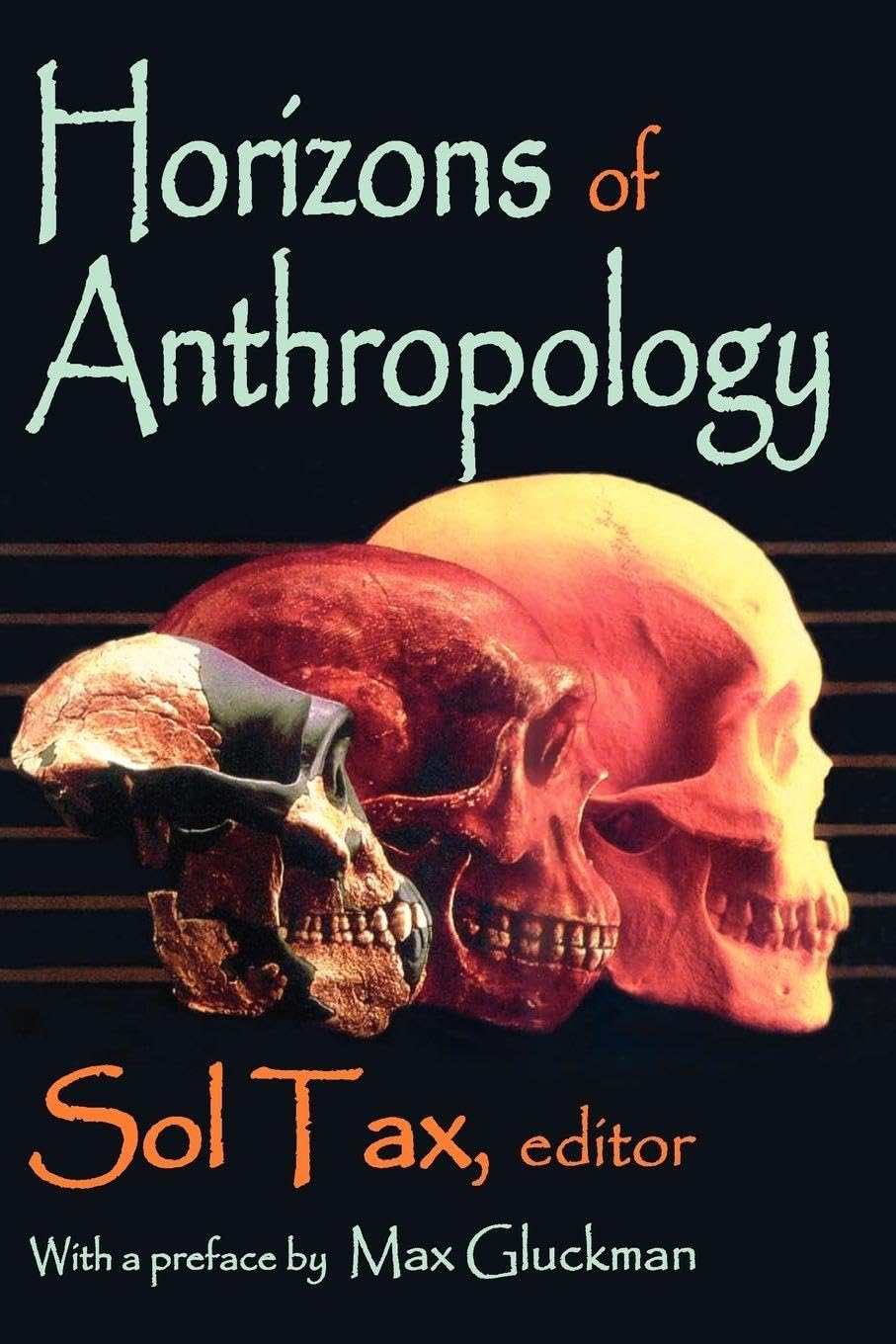
The scientific study of human evolution and culture is about a hundred years old. This volume surveys its achievements and methods. Originally published more than forty years ago, the volume's contributors include people who have shaped anthropology's future. As Gluckman says in his Preface, the contributions "point to the horizons of increasing understanding of man, his evolution and his social setting, as seen by a rising generation of scholars." The book includes chapters on how man gradually became different from other primates--on the origin and nature of language and its contribution to our peculiarities as human beings. It surveys the long history of human culture and societies and the theories about their similarities and differences; it discusses human equality and inequality, and it considers, from the anthropologist's point of view, economics, politics, law, religion, medicine, and the arts. In recent decades the various branches of anthropology--physical, cultural, psychological, and social--have become more specialized, and each branch is increasingly linking itself to its appropriate cognate, biological, psychological, or social sciences. Yet there remains a central common field to anthropology, as the science of man, for practitioners in all its branches. This book develops that common interest and deals with the specific problems of various parts of the field. The book brings out the basic nature of anthropology and the extraordinary fascination that lies in the systematic study of the exuberant variety of human societies and customs. -The book is intended for the intelligent layman rather than the professional anthropologist.... [T]his is an instructive and stimulating book.- --J. S. La Fontaine, Man -The volume can be summed up as: A series of simple readable accounts by competent scholars, of the status quo in anthropology in several fields, with occasional sign posts pointing out the directions that study appears to be taking, and, moreover, why these trends are important.... I think the book quite worthwhile as an indication of trends; it will be bought by many students and used in conjunction with many classes.- --Jess D. Jennings, American Anthropologist -The industrious and ingenious editor of anthropological journals, series, and books, Sol Tax, has induced several younger members of the profession to show their wares.- --Wilson D. Wallis, The Quarterly Review of Biology "The book is intended for the intelligent layman rather than the professional anthropologist.... [T]his is an instructive and stimulating book." --J. S. La Fontaine, Man "The volume can be summed up as: A series of simple readable accounts by competent scholars, of the status quo in anthropology in several fields, with occasional sign posts pointing out the directions that study appears to be taking, and, moreover, why these trends are important.... I think the book quite worthwhile as an indication of trends; it will be bought by many students and used in conjunction with many classes." --Jess D. Jennings, American Anthropologist "The industrious and ingenious editor of anthropological journals, series, and books, Sol Tax, has induced several younger members of the profession to show their wares." --Wilson D. Wallis, The Quarterly Review of Biology "The book is intended for the intelligent layman rather than the professional anthropologist.... [T]his is an instructive and stimulating book." --J. S. La Fontaine, Man "The volume can be summed up as: A series of simple readable accounts by competent scholars, of the status quo in anthropology in several fields, with occasional sign posts pointing out the directions that study appears to be taking, and, moreover, why these trends are important.... I think the book quite worthwhile as an indication of trends; it will be bought by many students and used in conjunction with many classes." --Jess D. Jennings, American Anthropologist "The industrious and ingenious editor of anthropological journals, series, and books, Sol Tax, has induced several younger members of the profession to show their wares." --Wilson D. Wallis, The Quarterly Review of Biology SOL TAX is Professor of Anthropology at the University of Chicago and is Editor of Current Anthropology. His field work among Middle and North American Indians has resulted in such books as Penny Capitalism and Heritage of Conquest, and in the development of what is now called Action Anthropology. He has edited many books, including the three-volume symposium, Evolution After Darwin. He was President of the Ameri- 10 Contributors can Anthropological Association in 1958-59 and in 1962 received the Viking Fund Medal in Anthropology.