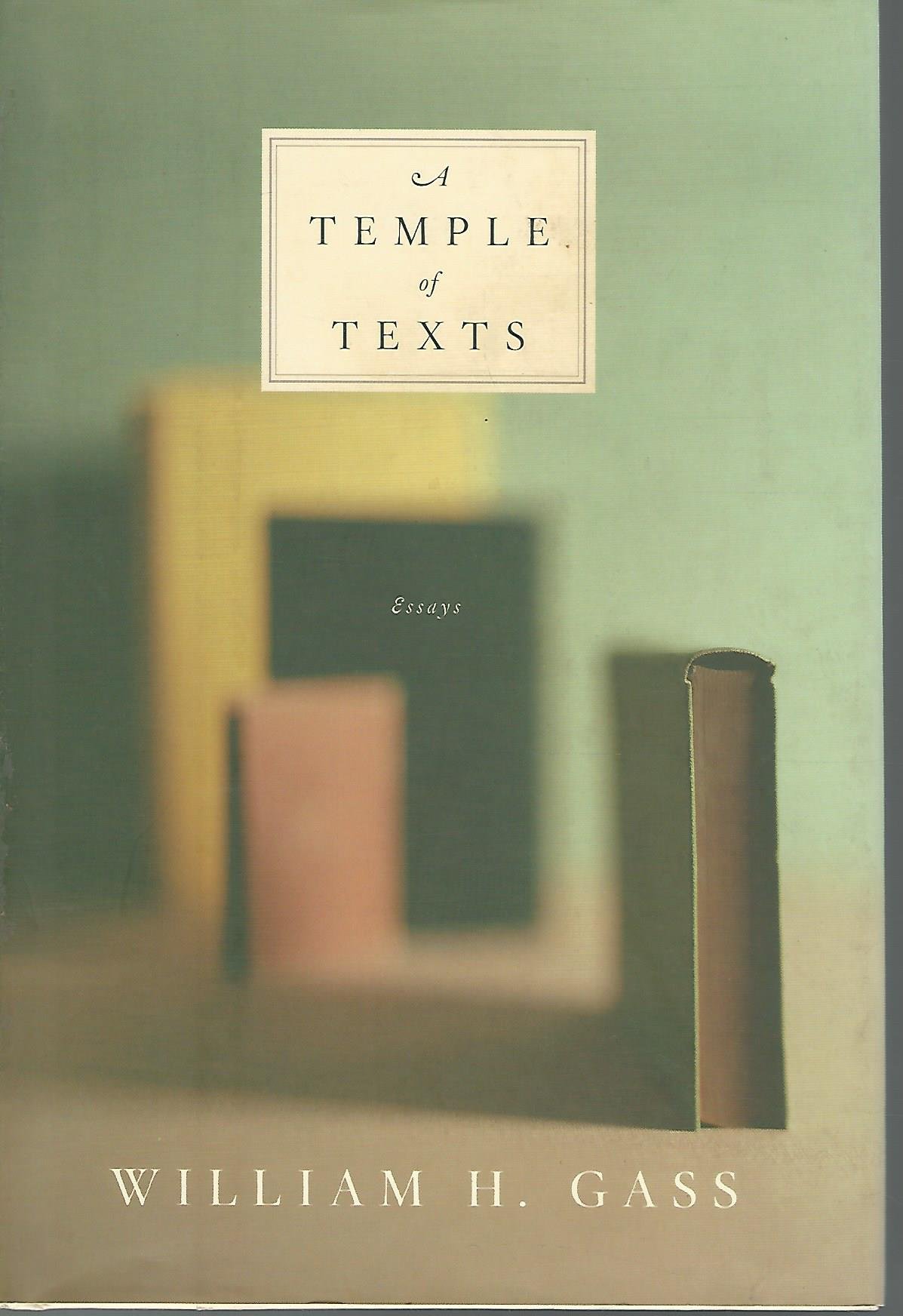
From one of the most admired essayists and novelists at work today: a new collection of essays—his first since Tests of Time , winner of the National Book Critics Circle Award for Criticism. These twenty-five essays speak to the nature and value of writing and to the books that result from a deep commitment to the word. Here is Gass on Rilke and Gertrude Stein; on friends such as Stanley Elkin, Robert Coover, and William Gaddis; and on a company of “healthy dissidents,” among them Rabelais, Elias Canetti, John Hawkes, and Gabriel García Márquez. In the title essay, Gass offers an annotated list of the fifty books that have most influenced his thinking and his work and writes about his first reaction to reading each. Among the books: Ludwig Wittgenstein’s Tractatus Logico-Philosophicus (“A lightning bolt,” Gass writes. “Philosophy was not dead after all. Philosophical ambitions were not extinguished. Philosophical beauty had not fled prose.”) . . . Ben Jonson’s The Alchemist (“A man after my own heart. He is capable of the simplest lyrical stroke, as bold and direct as a line by Matisse, but he can be complex in a manner that could cast Nabokov in the shade . . . Shakespeare may have been smarter, but he did not know as much.”) . . . Gustave Flaubert’s letters (“Here I learned—and learned—and learned.”) And after reading Malory’s Le Morte d’Arthur , Gass writes “I began to eat books like an alien worm.” In the concluding essay, “Evil,” Gass enlarges upon the themes of artistic quality and cultural values that are central to the books he has considered, many of which seek to reveal the worst in people while admiring what they do best. As Gass writes, “The true alchemists do not change lead into gold, they change the world into words.” A Temple of Texts is Gass at his most alchemical. It's unfortunate that the term critic often connotes negativity and sniping. What novelist and professor of philosophy William Gass practices in his critical essays is more in the line of learned appreciation or ecstatic advocacy. Though many of these pieces first appeared in other books as forwards, afterwards, and introductions, reviewers feel that A Temple of Texts may be his most cohesive collection yet. Gass's allusions and elaborate metaphors don't make for skimming. But for these willing to dig in, the author fulfills his mission "to provide suggestions of where best to start, what to expect, how to look or read or listen; and to give reasons why the work should be treated with seriousness and respect." Copyright © 2004 Phillips & Nelson Media, Inc. *Starred Review* Each collection of essays by Gass is an event, and this gathering of 25 vital and virtuoso inquiries into the pleasures and value of literature is, as the title suggests, at once exalted and sheltering. In Tests of Time (2002), winner of the National Book Critics Circle Award, Gass focused on the state of the writer in our war-torn world. Here he celebrates the book. Gass cannily explicates texts sacred in the realms of religion and literature, building a "temple of texts" out of "Fifty Literary Pillars," a provocative array of writers that includes Samuel Beckett, who "writes equally well in two languages: Nitty and Gritty." (For Gass, wit always accompanies wonderment.) A more serene and syntactically gifted critic than his fellow literary giant, Harold Bloom, Gass offers exquisite and clarion readings of Erasmus, Gertrude Stein, Stanley Elkin, and many underappreciated writers. Unmatched in the intensity of his comprehension and the elegance of his analysis, Gass constructs erudite and spirited essays that readers will add to their temples of texts, especially "Influence," a brilliant riff on shades of meaning, and "A Defense of the Book," incisive testimony to the ongoing significance of books and libraries. Donna Seaman Copyright © American Library Association. All rights reserved William H. Gass—essayist, novelist, literary critic—was born in Fargo, North Dakota. He has been the recipient of the first PEN/Nabokov Award, the PEN/Spielvogel-Diamonstein Award for the Art of the Essay, three National Book Critics Circle Awards for Criticism, a Lannan Foundation Lifetime Achievement Award, the Award for Fiction and the Medal of Merit for Fiction from the Academy and Institute of Arts and Letters, and fellowships from the Rockefeller and Guggenheim Foundations. He lives in St. Louis. No one is better than William H. Gass at communicating the sublime and rapturous excitement of reading. This essayist, novelist and teacher is now in his eighties, and yet he still approaches books as if he were a young man hurrying to a rendezvous with a gorgeous older woman. When Gass describes the diction of Robert Burton or Gertrude Stein, the sentences of John Hawkes or Robert Coover, he shifts constantly between reverent awe and visceral eagerness, between a hunger for more and a touching sense of gratitude. Yes, gratitude, for how else can an encount