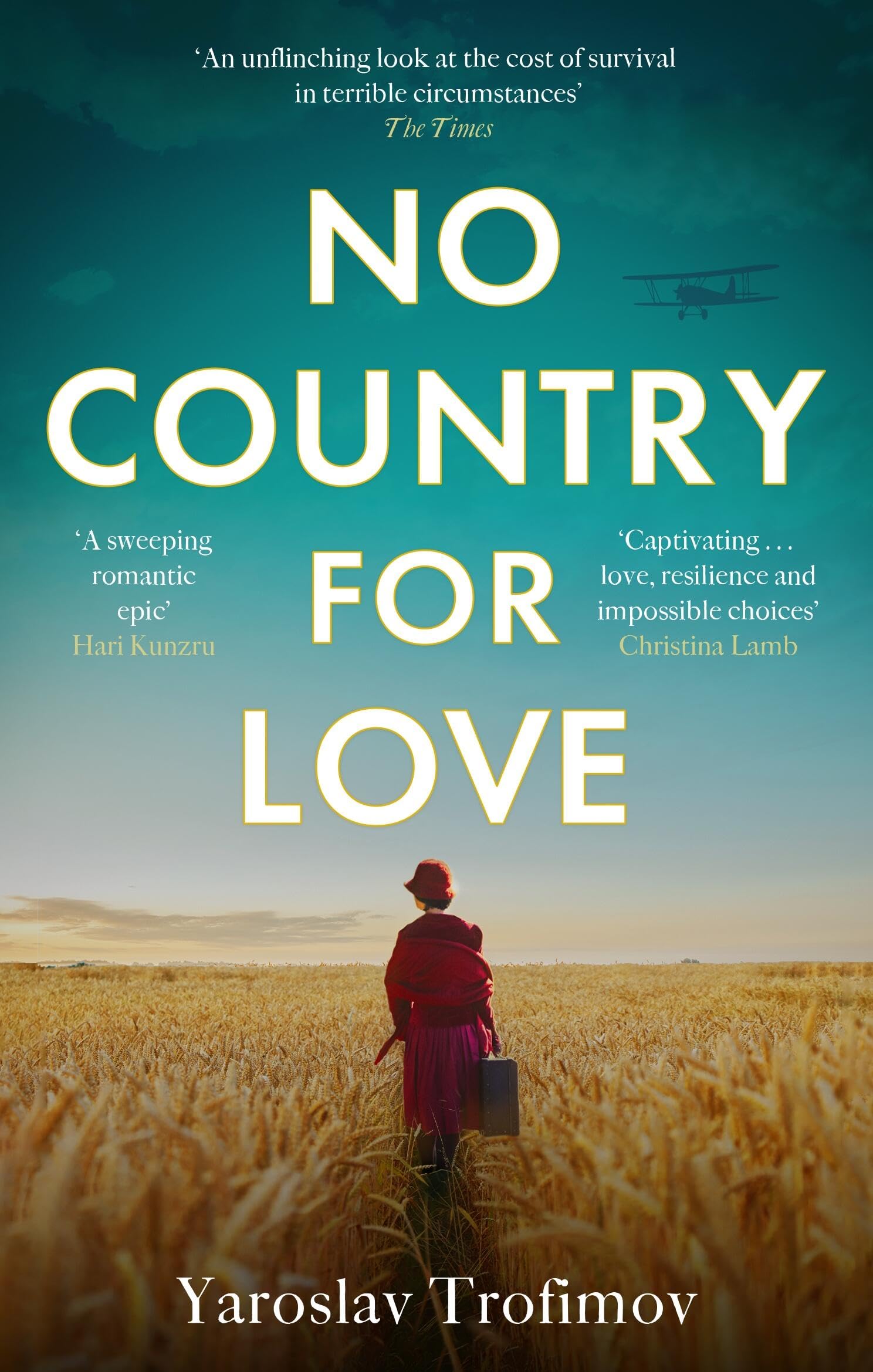
'A captivating sweep of a novel about love, resilience and impossible choices' Christina Lamb, chief foreign correspondent Sunday Times 'An unflinching look at the cost of survival in terrible circumstances, which has sad echoes in modern-day Ukraine' The Times Seventeen-year-old Debora Rosenbaum, ambitious and in love with literature, arrives in the capital of the new Ukrainian Soviet Socialist Republic, Kharkiv. The stale and forbidding ways of the past are out; 1930 is a new dawn, the Soviet era, where skyscrapers go up overnight. Debora finds work and meets a dashing young officer named Samuel who is training to become a fighter pilot. But Debora's prospects - and Ukraine's - soon dim. State-induced famine rolls through the depleted countryside, and any deviation from Moscow ideology is punished by disappearance. When Samuel is sentenced to ten years' hard labour, Debora is left on her own with a baby. As advancing Nazi armies move through Ukraine, its yellow fields of wheat run red with blood. Forced to renounce the man she loves, her identity and even her name, Debora also learns to endure, manipulate and resist. No Country for Love follows the hard choices Debora makes as Ukraine, caught between two totalitarian ideologies, turns into the deadliest place in the world - while she tries to protect those she loves most. 'Doctor Zhivago meets Stalingrad - a mix of romantic historical fiction and gritty, reportage-like storytelling... The history is spot-on, going from pre-Communist times, through World War II, to the era of Stalin and after. And the stories it tells of the human heart, through the eyes of its heroine Debora Rosenbaum and those who befriend or betray her, are unforgettable' NPR Best Books of the Year Debora's story bears witness to the horrors of war and of Stalinism, and she struggles with impossible moral choices she has to make to keep herself and her family alive . At one point her mother writes a consoling letter to her: "We are up against history. History is a wild and bloodthirsty animal... All you can do is try to be invisible. Invisible to survive." This debut by Yaroslav Trofimov, a Kyiv-born foreign correspondent for the Wall St Journal, is an unflinching look at the cost of survival in terrible circumstances, which has sad echoes in modern-day Ukraine ― The Times Debora's story bears witness to the horrors of war and of Stalinism, and she struggles with impossible moral choices she has to make to keep herself and her family alive . At one point her mother writes a consoling letter to her: "We are up against history. History is a wild and bloodthirsty animal... All you can do is try to be invisible. Invisible to survive." This debut by Yaroslav Trofimov, a Kyiv-born foreign correspondent for the Wall St Journal, is an unflinching look at the cost of survival in terrible circumstances, which has sad echoes in modern-day Ukraine ― The Times Trofimov... brings a journalist's keen eye to the story: telling details make the action compelling throughout. Debora is an engaging, tenacious protagonist, and even minor characters are convincingly drawn... Rendering Ukraine's bloodsoaked landscape with sensitivity, as Mr Trofimov has done, does a service both to the victims of those terrible historical events and to the Ukrainians who are fighting against Russia now to preserve their country's freedom. This, says the book between its lines, is what Ukrainians have endured; these are the awful compromises they had to make in the past; and this is why they so loathe and fear their enemy ― Economist Trofimov... brings a journalist's keen eye to the story: telling details make the action compelling throughout. Debora is an engaging, tenacious protagonist, and even minor characters are convincingly drawn... Rendering Ukraine's bloodsoaked landscape with sensitivity, as Mr Trofimov has done, does a service both to the victims of those terrible historical events and to the Ukrainians who are fighting against Russia now to preserve their country's freedom. This, says the book between its lines, is what Ukrainians have endured; these are the awful compromises they had to make in the past; and this is why they so loathe and fear their enemy ― Economist In contrast to typical Western-oriented stories set in the Soviet Union, No Country for Love offers the reader a more realistic portrayal by addressing the complex linguistic, cultural, and ethnic diversity often overlooked by other storytellers in favor of a simplified, reductive view of the region as being uniformly "Russian"... Debora is repeatedly forced to sacrifice her own needs and desires over the years, making unimaginable choices to safeguard the lives of her children. Yet, Trofimov navigates such moments with a profound respect for his protagonist ― Kyiv Independent In contrast to typical Western-oriented stories set in the Soviet Union, No Country for Love offers the reader a more realistic portr