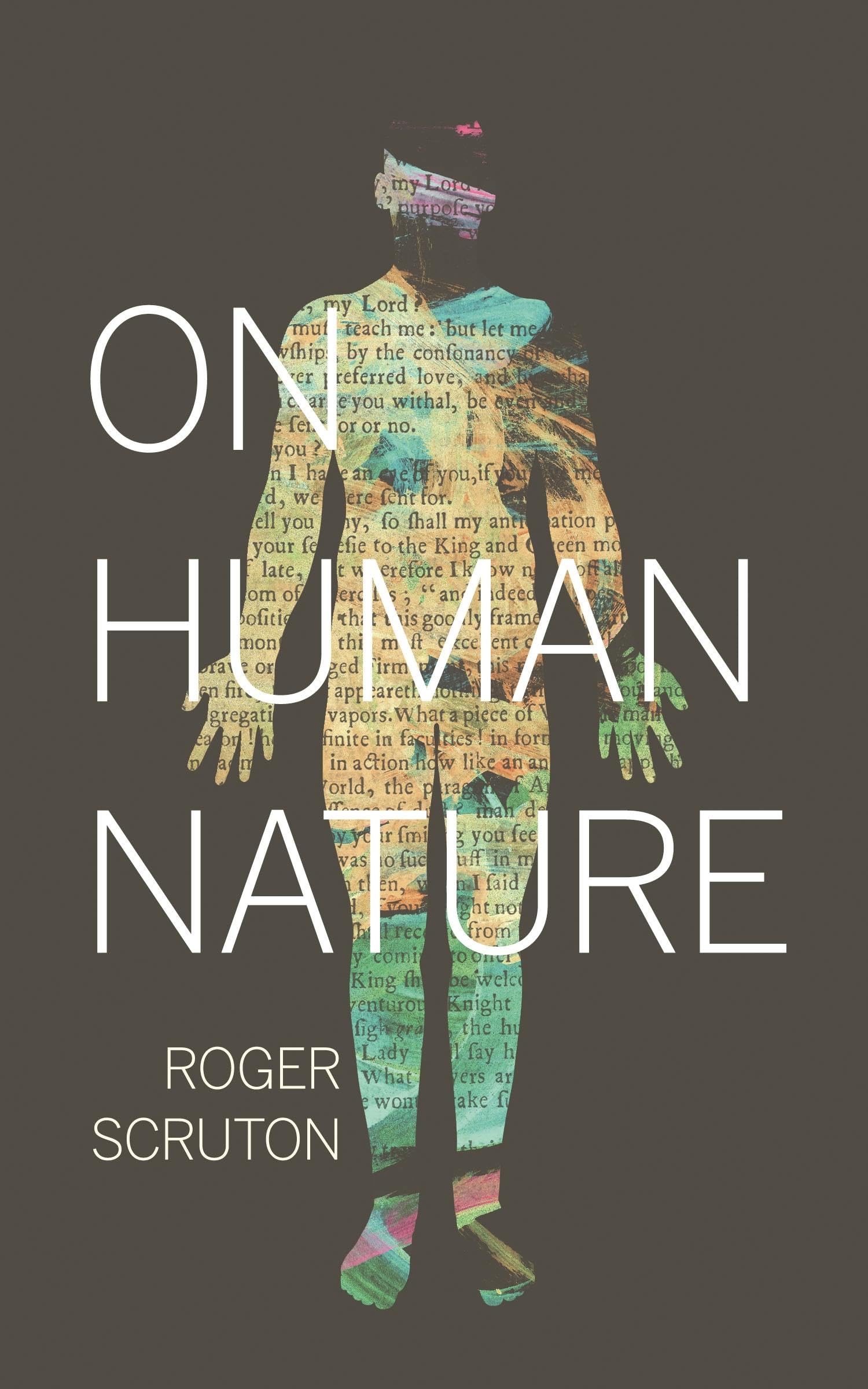
A brief, radical defense of human uniqueness from acclaimed philosopher Roger Scruton In this short book, acclaimed writer and philosopher Roger Scruton presents an original and radical defense of human uniqueness. Confronting the views of evolutionary psychologists, utilitarian moralists, and philosophical materialists such as Richard Dawkins and Daniel Dennett, Scruton argues that human beings cannot be understood simply as biological objects. We are not only human animals; we are also persons, in essential relation with other persons, and bound to them by obligations and rights. Our world is a shared world, exhibiting freedom, value, and accountability, and to understand it we must address other people face to face and I to I. Scruton develops and defends his account of human nature by ranging widely across intellectual history, from Plato and Averroës to Darwin and Wittgenstein. The book begins with Kant's suggestion that we are distinguished by our ability to say "I"―by our sense of ourselves as the centers of self-conscious reflection. This fact is manifested in our emotions, interests, and relations. It is the foundation of the moral sense, as well as of the aesthetic and religious conceptions through which we shape the human world and endow it with meaning. And it lies outside the scope of modern materialist philosophy, even though it is a natural and not a supernatural fact. Ultimately, Scruton offers a new way of understanding how self-consciousness affects the question of how we should live. The result is a rich view of human nature that challenges some of today's most fashionable ideas about our species. "One of Blackwell’s Best of Non-Fiction 2017" "[F]inely written, compactly argued." ---James Ryerson, New York Times Book Review "A luminous sketch of what we are, or might be, that will inspire some readers and infuriate others." ---Kieran Setiya, Times Literary Supplement "Roger Scruton's On Human Nature . . . gives a brief, poetic account of a way of thinking about ourselves that many of us, especially with a background in the humanities, will find congenial." ---Adam Zeman, Standpoint " On Human Nature is a tour de force of a rare kind. In clear, elegant prose it makes large claims in metaphysics, morals and, by implication, politics." ― The Economist " On Human Nature is a fine performance." ---Richard King, The Australian "Wide-reaching, stimulating and learned. . . . Scruton has here given us a succinct but properly philosophical account of human nature. It is a timely and useful corrective against the sterile ethical theories which dominate the medical ethics literature. Students and educators alike will find its content stimulating, and its fine prose enjoyable. Many philosophers take it upon themselves to dismantle our black-and-white notions, and help us see the world in its true shades-of-grey complexity. But few inject into it the colour needed to make it a joy. Scruton is one such philosopher, and thus his work is to be commended now as ever." ---Toni C. Saad, The New Bioethics "I admire Roger Scruton's stance and I admire his writing. In this short book, he raises and discusses deeply important issues about the human world." ―Simon Blackburn, author of Think: A Compelling Introduction to Philosophy "A tour de force, this book presents an original and important view of human nature." ―Anthony O'Hear, University of Buckingham "I admire Roger Scruton's stance and I admire his writing. In this short book, he raises and discusses deeply important issues about the human world." --Simon Blackburn, author of Think: A Compelling Introduction to Philosophy "A tour de force, this book presents an original and important view of human nature." --Anthony O'Hear, University of Buckingham Roger Scruton (1944–2020) was a writer and philosopher. His many books included The Soul of the World and The Aesthetics of Architecture (both Princeton), as well as A Short History of Modern Philosophy . On Human Nature By Roger Scruton PRINCETON UNIVERSITY PRESS Copyright © 2017 Princeton University Press All rights reserved. ISBN: 978-0-691-16875-3 Contents Preface, vii, Chapter 1. Human Kind, 1, Chapter 2. Human Relations, 50, Chapter 3. The Moral Life, 79, Chapter 4. Sacred Obligations, 113, Index of Names, 145, Index of Subjects, 149, CHAPTER 1 HUMAN KIND We human beings are animals, governed by the laws of biology. Our life and death are biological processes, of a kind that we witness in other animals too. We have biological needs and are influenced and constrained by genes with their own reproductive imperative. And this genetic imperative manifests itself in our emotional life, in ways that remind us of the body and its power over us. For centuries poets and philosophers have told stories about erotic love — Plato leading the way. These stories have endowed the object of love with a value, a mystery, and a metaphysical distinction