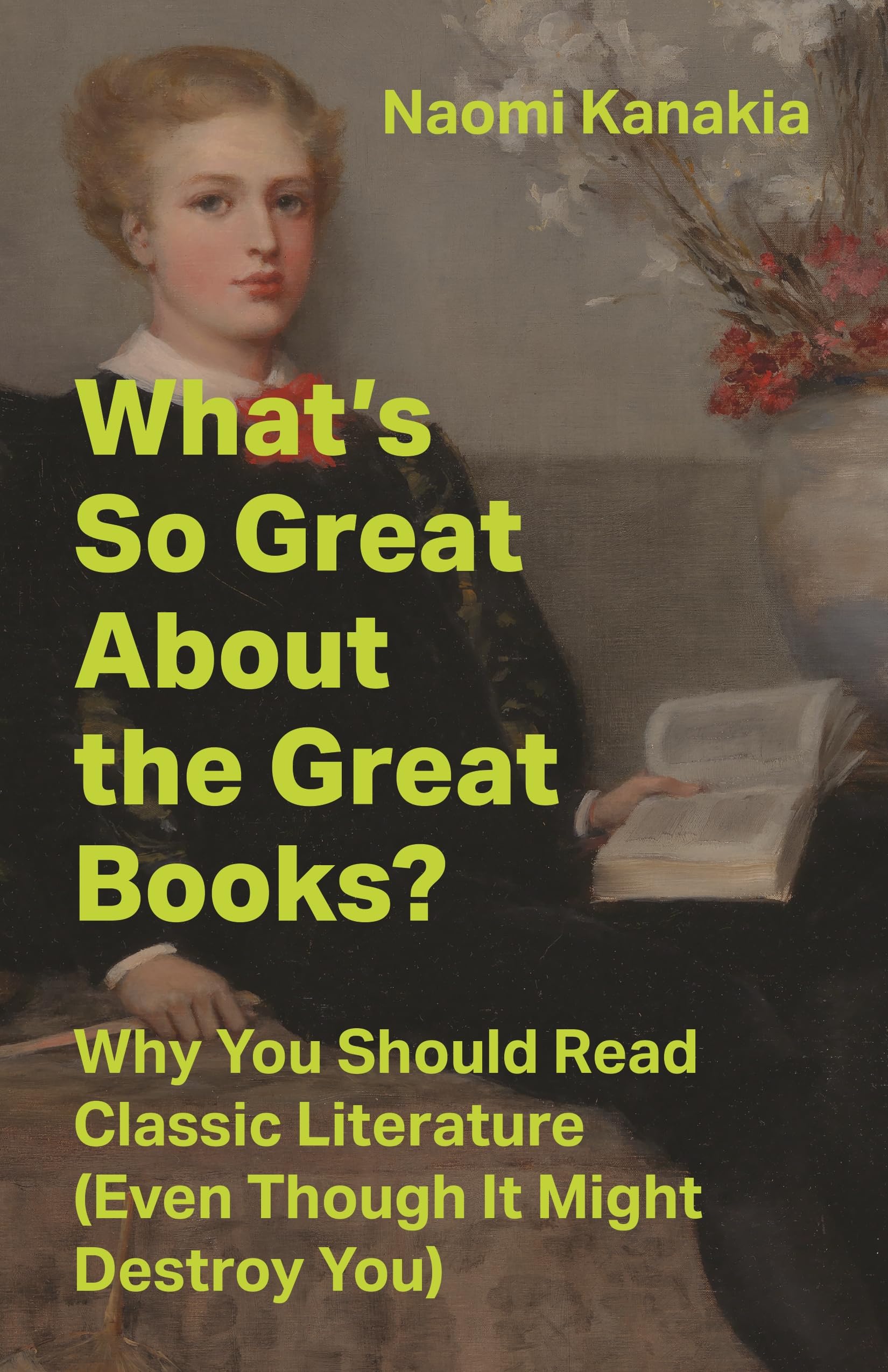
A popular novelist and literary blogger answers those who claim the classics are too difficult, too problematic, and too white—and explains what we gain by reading them When she was in her early twenties, then-aspiring writer Naomi Kanakia set out to read the Great Books—humankind’s most highly regarded literary classics, representing “the best that human beings have thought or said,” as determined by the two elderly intellectuals who’d written the guidebook she consulted. After twenty years, she has made her way through about two-thirds of these books, and she’s found reading them to be an immensely pleasurable and insightful activity. Plato, Milton, Tolstoy, Proust, all those dead guys—their books have stood the test of time. But since beginning her journey, Kanakia has found that although reading the Great Books is part of a longstanding tradition of engaging with the thought of previous generations, it is also a highly contingent activity that arose out of a specific time and place, the brainchild of a small group of early twentieth-century popularizers associated with Columbia University and the University of Chicago. And people have always been skeptical about the idea of reading the Great Books, asking if this is truly a realistic or even desirable goal for the ordinary person. A more recent and growing group of Great Books skeptics asks if these works are too problematic, reactionary, and irrelevant to bother reading. Kanakia, a self-described “left-of-center person,” grapples with these objections, attempting to restore context for the Great Books even as she sticks up for them. Because books that expose us to fundamental truths about the nature of beauty and reality are worth fighting for. "A convincing case for Great Books as the road to self-discovery and moral action." ― Kirkus Reviews "Through an intimate discourse on identity and literature, What’s So Great About the Great Books , interrogates the canon. . . . Provocative." ---Danielle Shi, Zyzzyva " What’s So Great About the Great Books? is a spirited, welcome argument about the value of reading—reading on your own time, with your own appetites and needs, with your desire to make something meaningful of your life after your formal education is behind you. It is an appeal for reading whole books, challenging books, old books, books that have survived scrutiny and even contempt, books that affirm without simplifying, books Kanakia is willing to call 'great.’" ---Todd Shy, American Scholar "[A]n encouraging guide for contemporary adults who want to be well-read and yet are not sure whether reading Great Books will reward their time." ---Abra McAndrew, The Booktender "What I love about Naomi as both a reader and a writer is that she has created a perspective that feels entirely her own. . . . There is something deeply motivating about watching someone pursue intellectual life with that much vigor, sincerity and curiosity. . . . What’s So Great About the Great Books? [is] a thoughtful and generous defense of reading classic literature." ---Petya K. Grady, A Reading Life "Kanakia’s treatment of these subjects is wonderfully illuminating. And the extreme skepticism with which she approaches the concept gives her conclusion — that she loves these books; and that they are worth reading — a beautiful force… highly satisfying for any lover of literature…[Kanakia] is one of the best critics and literary Substackers around... She has a rare talent for this, and also a rare talent for erudition without pretension." ---Valerie Stivers, UnHerd " What’s So Great About the Great Books? . . . provide[s] you many hours of worthwhile insights and ideas to chew on." ---John Warner, The Biblioracle Recommends "Kanakia is challenging me to examine my own love for the classics, and to find new ways of discussing them." ---Marissa Wu, PureWow "Dynamic and thought-provoking. . . . I’d like to believe that this quirky, smart, passionate, occasionally frustrating but far more often charming volume does offer hope: that, even in the age of smartphone screens, Instagram, and TikTok, there is still room for the Great Books and for the ways in which they can help us think more deeply about what it means to be a human being and a citizen." ---Cathy Young, The Bulwark “Naomi Kanakia’s treatment of the Great Books is deviously casual and unassuming. But don’t be fooled: it’s a deeply informed, incisive, and far-reaching argument for why Great Books are worth the effort they demand, why they are, indeed, great, and why their greatness is inseparable from their problematic character. There is no better introduction to why the Great Books matter and how to start reading them than this book.”— Roosevelt Montas, author of Rescuing Socrates "If there's one thing our culture needs, it is people from all walks of life reading more and better books. If talk of Great Books seems stuffy and overheated, Naomi Kanakia's voice—clear, matter-of-fact, and b