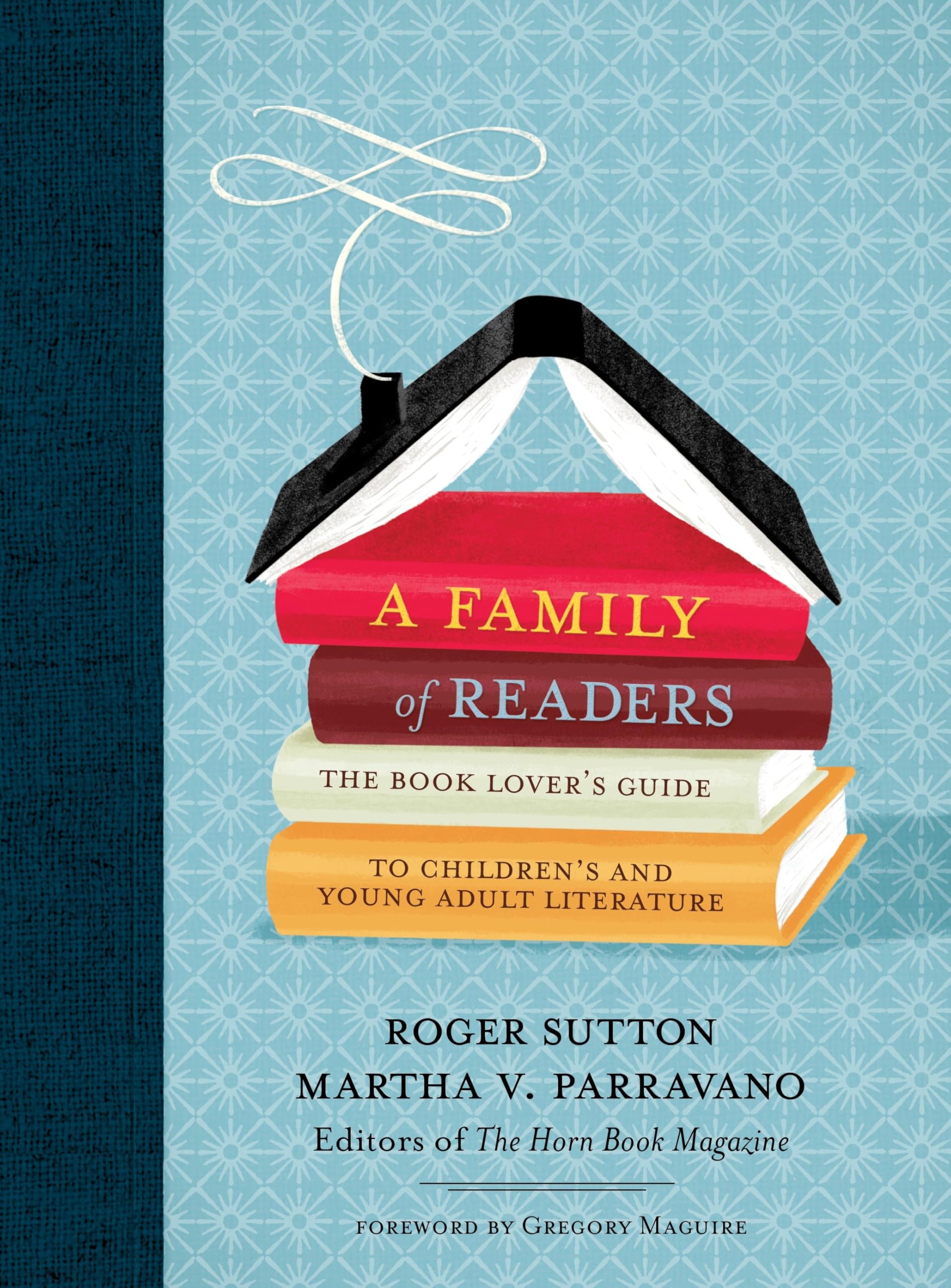
Two of the most trusted reviewers in the field join with top authors, illustrators, and critics in a definitive guide to choosing books for children — and nurturing their love of reading. A Family of Readers is the definitive resource for parents interested in enriching the reading lives of their children. It’s divided into four sections: 1. Reading to Them: Choosing and sharing board books and picture books with babies and very young children. 2. Reading with Them: Launching the new reader with easy readers and chapter books. 3. Reading on Their Own: Exploring what children read — and how they read — by genre and gender. 4. Leaving Them Alone: Respecting the reading privacy of the young adult. Roger Sutton knows how and why children read. He must, as the editor in chief of The Horn Book , which since 1924 has been America’s best source for reviews of books for young readers. But for many parents, selecting books for their children can make them feel lost. In this essential resource, Roger Sutton and Martha V. Parravano, executive editor at the magazine, offer thoughtful essays that consider how books are read to (and then by) young people. They invite such leading authors and artists as Maurice Sendak, Katherine Paterson, Margaret Mahy, and Jon Scieszka, as well as a selection of top critics, to add their voices about the genres they know best. The result is an indispensable readers’ companion to everything from wordless board books to the most complex and daring young adult novels. Fulfills its promise as an "indispensable readers' companion," and librarians will enjoy hearing from their favorite authors and illustrators as they elaborate on the genres they know best —Library Media Connection (starred review) Roger Sutton has been the editor in chief of The Horn Book since 1996. He has served as a judge for every major children’s book award, frequently teaches and speaks about children's books, and maintains a lively blog called Read Roger. He lives in Jamaica Plain, Massachusetts. Martha V. Parravano has also been at The Horn Book since 1996 and is now the magazine’s executive editor. She lives in Arlington, Massachusetts. Chapter One: BOOKS FOR BABIES "A Future of Page Turns" - Martha V. Parravano Babies don't need complex stories, elaborate artwork, or high educational content. Books for babies can be as simple as Tana Hoban's groundbreaking series of wordless black-and-white board books (Black on White; White on Black), with their high-contrast images of bibs, pacifiers, stuffed animals, and other homely objects associated with newborns. But though the books themselves may be simple, the interaction is anything but: with board books a baby is honing his visual and listening skills, bonding with the adult reader, and, yes, taking the first steps toward literacy. Every time an adult reads a book with a baby, she is passing on an essential building block of literacy: the page turn. The mechanics of reading—the fact that in order to read a book one has to turn its pages—is a basic skill, but it has to be learned. The page turn—the progression of left to right and front to back (at least in our Western culture)—is the foundation of reading. As an adult reader shares a book with a baby, she is transmitting that essential knowledge, the key to later literacy. Babies watch with remarkable intentness the components of their universe: faces, their own hands, a mobile. First board books should be a barely differentiated extension of that small universe. It's not necessary to use books to expand a baby's world—a reflection is more than sufficient. Babies respond to books that promote interaction—animal sounds, vehicle noises, movements, opportunities to name objects or body parts. Pictures in books for babies are not only visual feasts for the baby but prompts for parental commentary. Any book a parent reads to a baby, even a wordless one, will be an opportunity for expressive language, be it a re-creation of animal sounds or the naming of objects or the creation of spontaneous stories to go with the pictures. Board books are specifically made for babies: with their stiff, sturdy cardboard pages, nontoxic materials, and glossy wipability, they will survive teething, spills, spit-up, and worse—anything a baby can throw at them (sometimes literally). The most successful board-book creators tap into babies' enthusiasms, attention spans, and (occasionally) senses of humor. Helen Oxenbury's series of oversize board books, ALL FALL DOWN, CLAP HANDS, SAY GOODNIGHT, and TICKLE, TICKLE, features four diverse, active toddlers in an implied day-care setting singing, clapping, falling about, and waving—all with toddler-appropriate energy and warmth. Rosemary Wells's Max books are about the power struggle between a willful baby rabbit and his bossy older sister, Ruby. In MAX'S FIRST WORD, Ruby tries to persuade Max to name various innocuous household objects, but "Max's one word was BANG!" Wells connects w