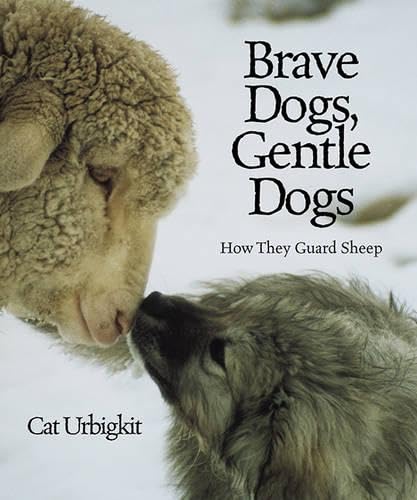
Like other livestock in the Rocky Mountains, sheep need protection from predators, such as coyotes and wolves. Guardian dogs help ranchers protect their flocks. But they are not the typical herding dogs, and they are not native to the region. The breeds were imported from Europe, where they have been guarding livestock for thousands of years. As puppies, they are placed in fleece and learn to identify with the smell of sheep. It isn't long before they meet their first sheep and mingle with the flock. With little training, the dogs instinctively know that their job is to keep a lookout for danger and now and then do some babysitting. Cat Urbigkit's engaging photo-essay shows how guardian dogs form a bond with the sheep that lasts throughout the dogs' life. K-Gr-3-In this attractive bilingual book, Urbigkit takes readers into the world of sheep and the dogs that so valiantly protect them. Surprisingly, they are not specially trained, but are raised among the sheep as one of their own. At birth, the puppiesÖ beds are made with fleece so they get used to the smell of sheep. A few weeks later they go out to meet their flock, and in a process called socialization they become protective of the animals they must defend. With her appealing photography and easy, though somewhat abrupt, narrative, this book is a solid source for readers and report writers. The Spanish translation is good, although there are a few words missing that would make sentences more cohesive, such as £ tales como su gran ….¥ Also, the use of £ mansos ¥ (literal translation of gentle) coupled with £ valientes ,¥ instead of £guardians,¥ is a better description of these animals: courageous, yet affectionate and obedient.– Narda McCarthy, Para los NiñosÖ Consultant, Weston, FL Copyright © Reed Business Information, a division of Reed Elsevier Inc. All rights reserved. K-Gr. 2. Through a relaxed narrative and pictures taken in a dramatic Wyoming setting, Urbigkit's photo-essay introduces children to guardian dogs--a category of working dog that is less well known than Seeing Eye dogs and herders. As Urbigkit explains, ranchers accustom future guardians to spending time around sheep by lining the puppies' beds with fleece; the rest, from warning away coyotes to playing babysitter at lambing time, is second nature. The book's 10-by-11-inch dimensions accommodate generously sized photos, allowing children to easily distinguish the white dogs from the sheep they closely resemble. Photos of the various guardian-dog species described would have made the author's note, which also explains the history of guardian dogs in the U.S., even better. But kids will still come away impressed by the "unique closeness" that can develop between two species and will want to return again and again to the heart-tugging images of shaggy puppies nuzzling their charges. Jennifer Mattson Copyright © American Library Association. All rights reserved "This will not only replace George Ancona's out-of-print Sheep Dog (1985) in libraries, it will rivet young dog lovers in general." —Kirkus Reviews "Kids will . . . come away impressed by the 'unique closeness' that can develop between two species and will want to return again and again to the heart-tugging images of shaggy puppies nuzzling their charges." —Booklist "Suitable for reading aloud as well as reading alone. . . . Dogs with jobs remain an alluring topic, and this could partner effectively with titles about rescue dogs and assistance dogs, provide an interesting slant on ranch life and practices, or just offer a good excuse for looking at some cute puppy pictures." —Bulletin of the Center for Children's Books Cat Urbigkit is a reporter and rancher living in Wyoming with her husband, Jim, and their son, Cass. They live on a ranch with a flock of sheep and their guardian dogs. This is Cat's first children's book. Used Book in Good Condition