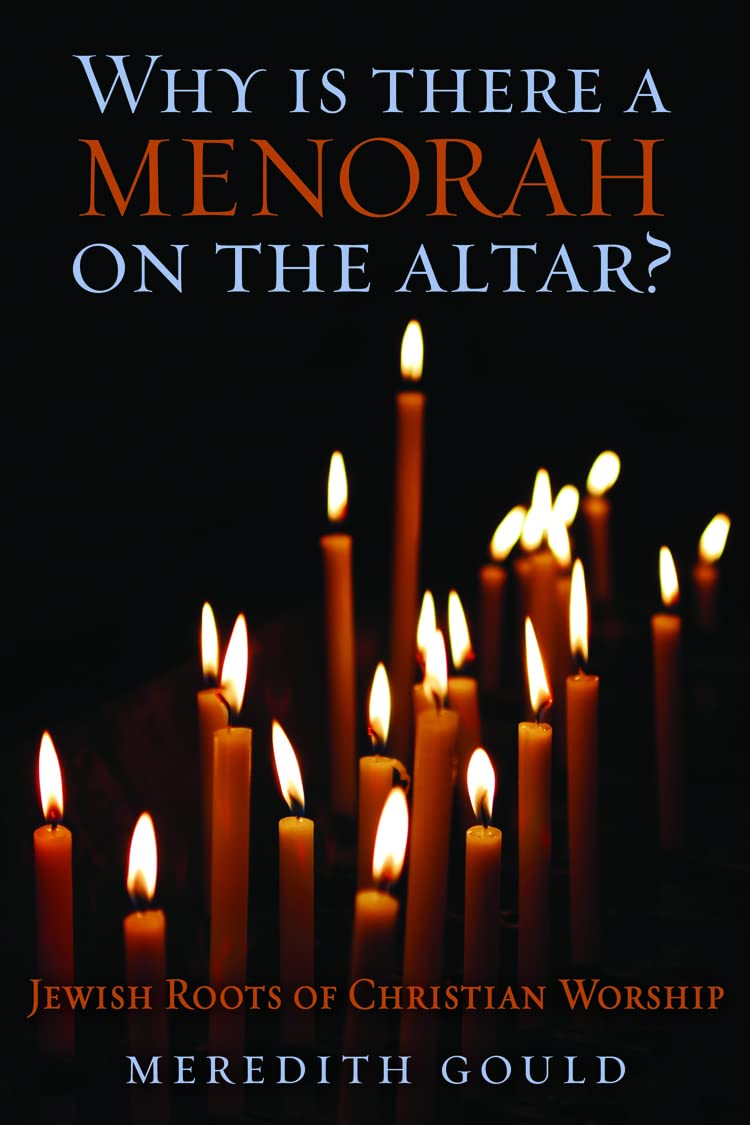
A desire and demand to know more about the Jewish legacy of Christian identity is growing among laity. A similar desire to foster interfaith understanding and dialogue is growing among leaders of local churches. Why Is There a Menorah on the Altar? seeks to meet these demands by providing information and insight about Judaism’s legacy as it is revealed in Christian rites, rituals, and traditions. Drawing upon scripture and historical sources, this book explains how Judaism has influenced the structure of liturgical worship; the design and décor of church sanctuaries; and how Baptism, Eucharist, and Confirmation find their roots in Judaism. This book invites readers to develop a deeper understanding of Judaism, one that will enrich their Christianity and appreciation for their enduring Jewish heritage. Includes: questions for reflection; activities for individuals or groups; and easy-to-follow timelines. Meredith Gould is a sociologist and author of seven books. In addition to writing about faith, she provides communications counsel to the healthcare industry. She lives in Princeton, New Jersey. Why is there a MENORAH ON THE ALTAR? Jewish Roots of Christian Worship By MEREDITH GOULD Church Publishing Incorporated Copyright © 2009 Meredith Gould All rights reserved. ISBN: 978-1-59627-117-3 Contents Acknowledgments............................................................ixForeword...................................................................xiCHAPTER 1 Reading Scripture...............................................1CHAPTER 2 History Matters.................................................19CHAPTER 3 Worship.........................................................37CHAPTER 4 Baptism.........................................................57CHAPTER 5 Holy Communion..................................................77CHAPTER 6 Confirmation....................................................97Afterword..................................................................113APPENDIX A: Timeline: Christianity Emerges from Judaism....................115APPENDIX B: Glossary of Hebrew Terms and Jewish Concepts...................119APPENDIX C: Selected Documents on Christian-Jewish Dialogue................127APPENDIX D: Recommended Resources..........................................147Notes......................................................................149Index......................................................................155 CHAPTER 1 Reading Scripture Your word is a lamp to my feetand a light to my path. Psalm 119:105 If you've picked up this book, it's probably because the titlehas piqued your curiosity about the "Judeo" part of yourJudeo-Christian heritage and you want to learn more about it.To gear up for this adventure, you'll need to hunker down andread quite a bit of scripture. Promise: this will enhance yourappreciation of ... everything! Here, I'll not only suggest what to read but how to read it. Your response to my counsel willundoubtedly be shaped by the Christian tradition in whichyou've been raised. If you're a Roman Catholic, an invitation to read scriptureon your own might make you feel a bit nervous at first.Although generations of Catholics read missals while theMass was being celebrated, only relatively recently have in-the-pewCatholics become as engaged in scripture study astheir Protestant sisters and brothers. I can think of a numberof esoteric and practical reasons why. Back in the thirteenth century, laity were flat-out forbiddento read scripture. Proclaiming the word of God and theprivilege of interpreting text became the exclusive right ofclergy. In part this had to do with literacy levels within thegeneral population; in part it had to do with the clericalismProtestant reformers railed against. While scripture had longbeen translated from Hebrew into Greek and then into Latin,it wasn't available in the vernacular to literate laity until thesixteenth and seventeenth centuries—for Protestants. Celebrating the Mass in local languages after the SecondVatican Council (1962–1965) made scripture much moreaccessible. By the end of the twentieth century, Catholic laityhad become more engaged not only with liturgical activities,but also with running parish ministries. This served to generatean increased demand for Bible study. In addition, convertsfrom traditions anchored in scripture study were unwilling torelinquish that upon becoming Catholic. Today, many moreregular in-and-out-of-the-pew Catholics read and study Christianscripture on their own or within parish-based groups. Butfor cradle Catholics of a certain generation, the suggestionthat anyone might independently study, interpret, and understandscripture may be off-putting. If you're a Protestant, an invitation to pay close attentionto scripture may seem like no big deal because you've beendoing it forever. You, however, might start feeling nervouswhen you encounter my suggestions abo