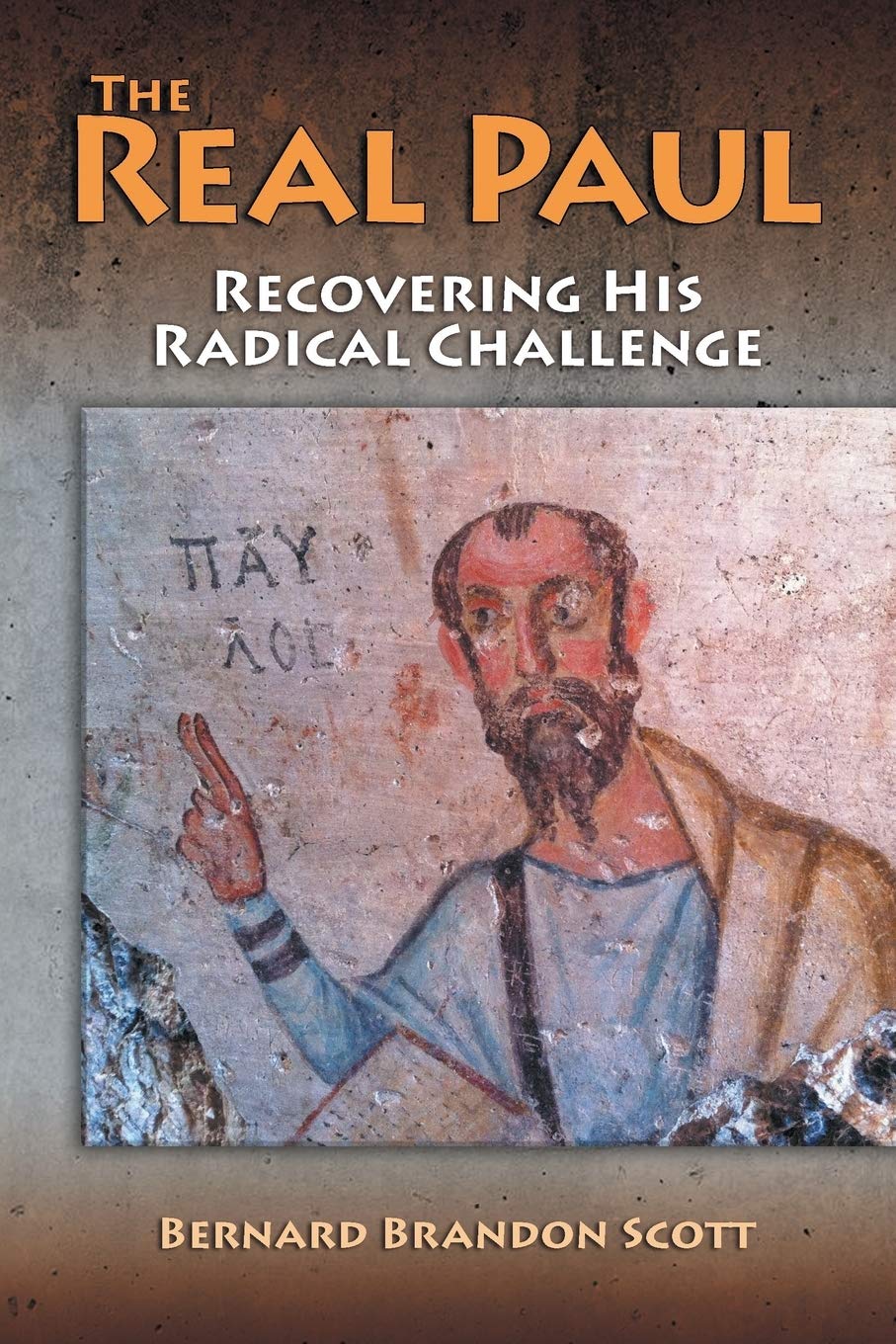
A slow rumbling, that has been building up among New Testament scholars for the past twenty years, is only now beginning to make its effects felt on a more general public. A new Paul is beginning to emerge, one who differs from the Paul of Augustine and Luther, who is no friend to the traditional orthodoxy that has co-opted him for almost two thousand years.To help us see Paul in this new way, Scott arrives at three conclusions argued step-by-step throughout the book: Paul was called; His concern was with the nations; Paul addresses particular situations, not a universal human condition.The new Paul threatened Roman authorities with anti-imperial rhetoric, much of which is still operative today. Thus, the new Paul may prove an even more radical challenge to church and society than did the historical Jesus. An engaging all-out attack on the Augustinian-Lutheran reading of Paul and his letters. The Real Paul gives new interpretations to what it meant for Paul to be called as the apostle to the Gentiles and takes Paul's claims seriously. --Stanley K. Stowers, Brown University Scott's treatment of Paul navigates the narrow gap between engaging in critical evaluation of Paul's language and making it intelligible to those interested in the topic but not necessarily trained in the methods and jargon of the specialists. Moreover, he recognizes the role that the historical devaluation of Judaism still plays in the way that Paul is usually interpreted, however inadvertent that may be, and he explicitly resists solutions that fail to counter that legacy. What a welcome read. --Mark Nanos, University of Kansas A remarkable book, clear, astute and challenging. Bernard Brandon Scott rides the recent wave of Pauline scholarship with courage and verve. His book elegantly stays the course: to detect the voiceprint of the historical Paul. ... Paul no longer wears the professor's robe of Augustine and Luther. Nor is he a controlling misogynist. ... The real Paul, for Scott, is a Jew who discovers that the God of Israel continues to surprise. --Arthur J. Dewey, Xavier University