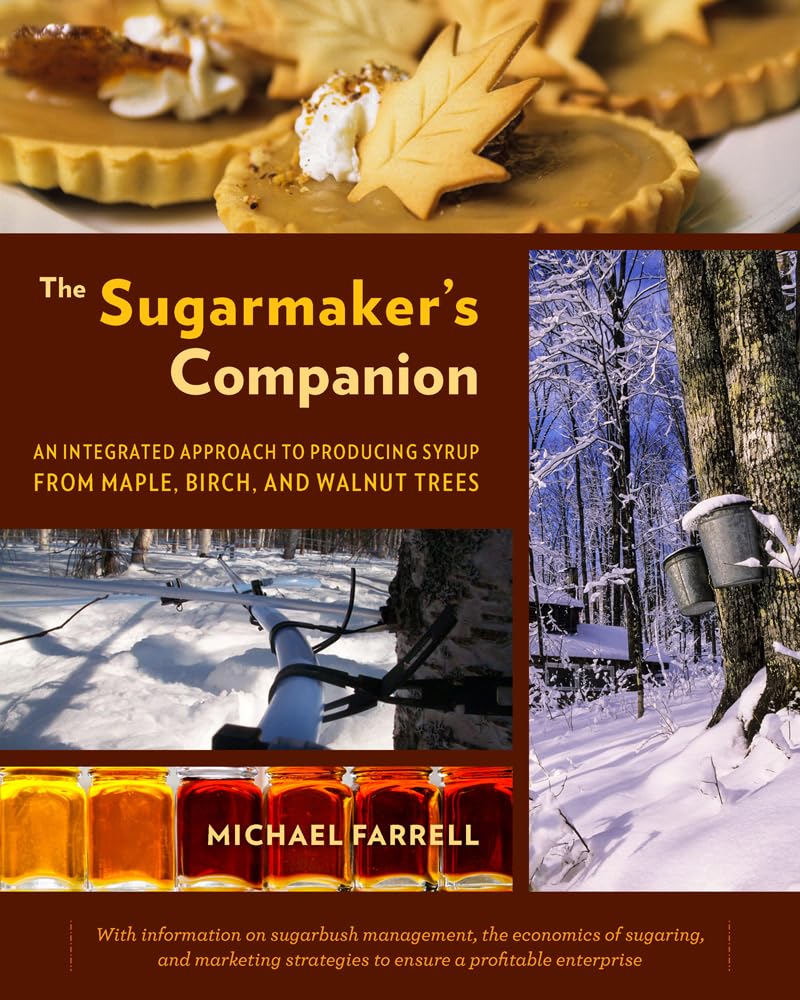
The Sugarmaker’s Companion is the first guide of its kind addressing the small- and large-scale syrup producer seeking to make a profitable business from maple, birch, and walnut sap. This comprehensive work incorporates valuable information on ecological forest management, value-added products, and the most up-to-date techniques on sap collection and processing. It is, most importantly, a guide to an integrated sugaring operation, interconnected to the whole-farm system, woodland, and community. Farrell documents the untapped potential of American forests and shows how sugaring can turn a substantial profit for farmers while providing tremendous enjoyment and satisfaction. Michael Farrell, sugarmaker and director of the Uihlein Forest at Cornell University, offers information on setting up and maintaining a viable sugaring business by incorporating the wisdom of traditional sugarmaking with the value of modern technology (such as reverse-osmosis machines and vacuum tubing). He gives a balanced view of the industry while offering a realistic picture of how modern technology can be beneficial, from both an economic and an environmental perspective. Within these pages, readers will find if syrup production is right for them (and on what scale), determine how to find trees for tapping, learn the essentials of sap collection, the art and science of sugarmaking, and how to build community through syrup production. There are many more unique aspects to this book that set it apart from anything else on the market, including: • A focus on maple as a local, sustainably produced and healthy alternative to corn syrup and other highly processed and artificial sweeteners; • The health benefits of sap and syrup in North America and throughout the world; • Attention to the questions of organic certification, sugarhouse registration, and the new international grading system; • Enhancing diversity in the sugarbush and interplanting understory crops for value-added products (ginseng, goldenseal, and mushrooms, specifically); • An economic analysis of utilizing maple trees for syrup or sawtimber production and the market opportunities for taphole maple lumber; • The value of sap as a healthful and profitable energy drink; • Detailed analyses on the economics of buying and selling sap; • Lots of great information on marketing to create a profitable business model (based on scale, interest, and access), and more. . . . Applicable for a wide range of climates and regions, this book is sure to change the conversation around syrup production and prove invaluable for both home-scale and commercial sugarmakers alike. Anyone who enjoys a good pancake breakfast now and then knows the difference between artificial, fructose-laced concoctions and authentic maple syrup harvested directly from trees. The natural version of this elixir also trumps the competition by containing abundant beneficial nutrients, an interesting detail that is just one among thousands readers will discover in this comprehensive guide to “sugarmaking,” the common term for turning sap into syrup, by Cornell University researcher Farrell. The author, who taps some 5,000 maples every year at a scientific field station in Lake Placid, New York, offers a wealth of expertise to entrepreneurs hoping to turn a profit in the popular, still-growing maple syrup business. In more than 350 well-illustrated pages, Farrell covers everything from locating prime tapping trees and the basics of syrup collection to syrup grading systems and marketing strategies. While the manual is directed mostly at landowners with enough trees for a high production operation, novices interested in tapping a few backyard maples for a flavorful treat will also benefit from Farrell’s seasoned advice. --Carl Hays Library Journal - "The art of sugaring (tapping trees to make syrup) is enjoyed by home hobbyists and commercial farmers alike. Here, Farrell uses his experience as director of Cornell University’s Uihlein Forest, a maple syrup research station, to create a comprehensive volume on the subject. Traditional and modern techniques are combined with a multitude of how-to’s on topics that include finding trees, collecting sap, processing, and marketing. Farrell also covers niche markets, such as tapping birch and walnut trees for sap and syrup, and outlines how to create a viable and profitable sugar-making business. Full-color images, along with charts and highlighted topics, make this book accessible to both the beginner and the experienced sugar maker. VERDICT While the wealth of information may seem daunting to novices, this work is a required reference for those who are seriously exploring sugar making as a small- or large-scale business. Hobbyists will find innovative techniques and ideas to broaden their scope of knowledge." Booklist - "Anyone who enjoys a good pancake breakfast now and then knows the difference between artificial, fruc