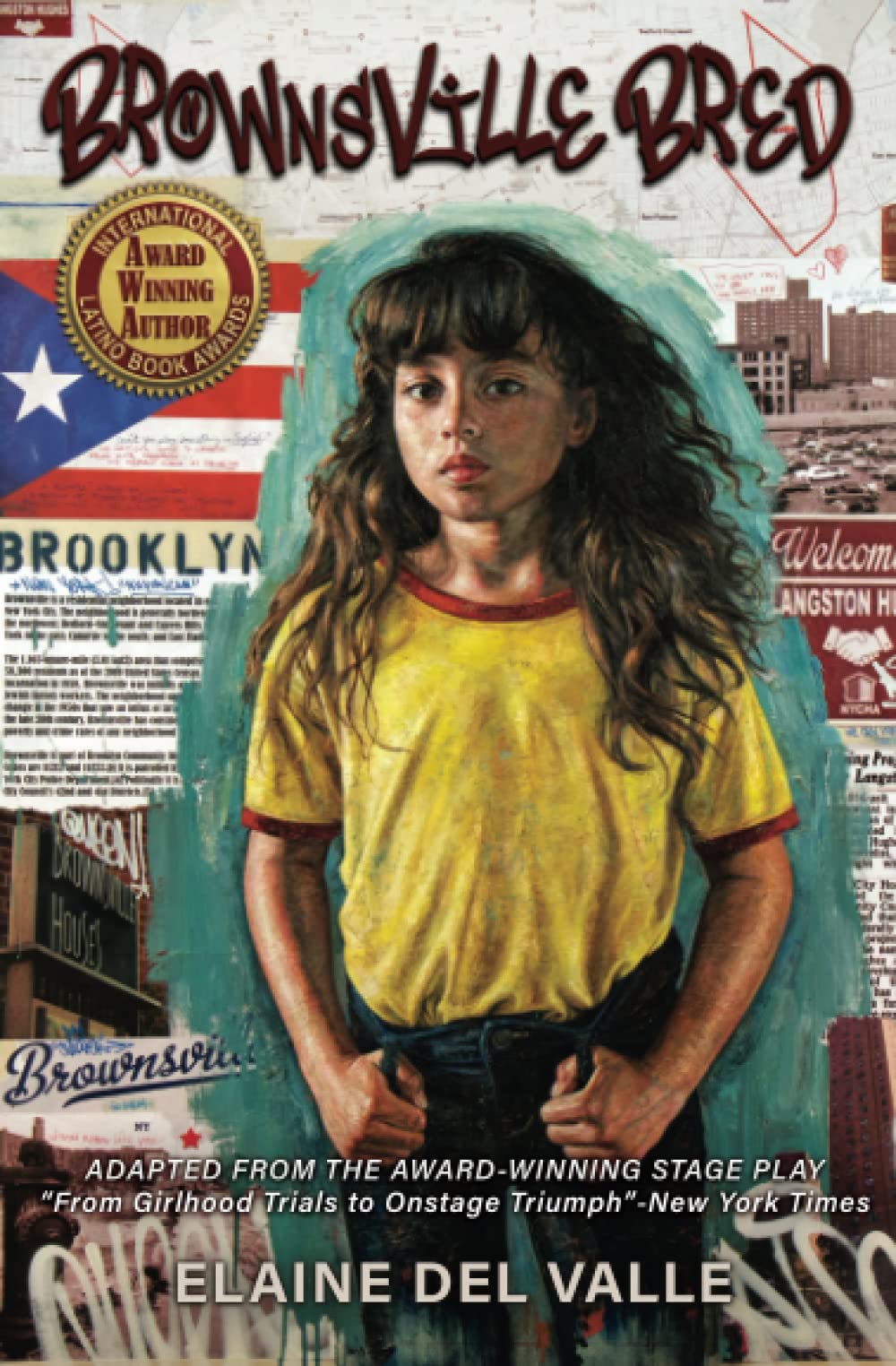
Brownsville Bred (adapted from her autobiographical stage play) is based on the life of Elaine Del Valle. A young adult novel told in a series of vignettes--some funny, some heartbreaking, some harrowing--it tells one girl's journey about growing up in the toughest neighborhood in New York. Set in 1980's Brownsville, Brooklyn, NY--A spunky Latina must find her own path as she comes of age to face the grim realities of the musician father she once idolized and the deteriorating neighborhood she calls home. BOOK LIFE CRITIC'S REPORT- Title: Brownsville Bred: Dreaming Out Loud Author: Elaine Del Valle Genre: Nonfiction/Memoir Audience: YA/Middle Grade Word Count: 35871 Assessment: Idea/Concept: Del Valle's autobiographical tale, adapted from her stage play, provides a textured, vibrant reading experience. Through the author's rich recollections, she offers both a visceral look at her own upbringing--in all its joys and hours of suffering--as well as perceptive commentary on the changes unfolding in a Brooklyn neighborhood. Prose: The author writes with a fluid, rhythmic cadence that heightens the story's power. The crackling language effectively mirrors young Del Valle's inner turmoil as well as her zest for life and desire to live meaningfully. Originality: Memoirs of childhood abound, but Del Valle makes the format her own through her performative writing style and vivid scene building. The work elicits a range of emotions from receptive young readers. Execution: Del Valle creatively and successfully weaves a poignant story of her transforming childhood home and the effects such changes have on her, her family, and the broader community. Score: Plot/Idea: 10 - Originality: 10 - Prose: 10 - Character/Execution: 10 - Overall: 10.00 Report Submitted: February 4, 2020 As a writer/director I seek to tell stories with unlikely female protagonists, to draw audiences into and through unique perspectives, to break down socio-economic barriers, and provoke thought. I began my career as an actress. Having studied acting at Carnegie Hall, and having my career limited to just commercial success, left me frustrated-- at the lack of and types of roles that were available for Latinas. I believe that the best way to effect change is to be the change. And so I began writing for stage--Within one year, I found myself off-broadway, garnering critical acclaim with my autobiographical, coming-of-age story "Brownsville Bred". The play chronicled my journey in, and out of, what was (then, and still is) the murder capital of NY-- Brownsville Brooklyn. (The New York Times calling it, "From Girlhood Trials to Onstage Triumph.") Fueled by my audiences, also hungry for truth and diversity in their entertainment , I knew I had to project my story onto a wider platform. I wanted to make film. I created my own filmmaker training ground, by beginning with the production of a web series, and with the full intent of readying myself to the eventual making of my stage play as a feature film. Nearly seven years later, after having produced over 50 short films and a Best Narrative Director Award, I wrote ME 3.769 as a first short film that may represent the protagonist and sensibility in my stageplay. I sliced the play into scenes and created short stories from each scene. While the entire stage play reflects a coming-of-age that spans six of our girl's most formative years, each scene was specific to a milestone that lead to her emotional strength. One such scene dealt with the girl's joyful desire to grow into her maturing body--a natural instinct squashed by the inappropriate touch, in a public pool setting. Of the many scenes in the 90 minute play, none more than this one, drew audience members to me after the show--Many at long last revealing "that happened to me too, and I never told anyone." I came to understand this painful truth was a bridge to common ground, breaking socio-economic barriers, and healing. The first script draft of (what is now) ME 3.769 told just one story embedded in the play. Moreover, with the METOO movement in full force, I was hearing victim-blaming from many sources. "Why was she there?", "Why did she go?", "Why didn't she tell?" In ME 3.769, I wanted to show how a girl can be consumed by the shame of an offense, and a subsequent, irrational, culpability. I wanted to reveal a private moment that lead to a long kept silence. Moreover, I hope that ME 3.769 can represent an important movement, one of selfless empowerment, a female protagonist whose bravery is compelled by the notion that she can stand, not for herself, but to effect a change and the prevention of suffering of our next female generation. I titled ME 3.769 as a reflection of the ME TOO moment. The number 3.769 reflects the 3.769 Billion women in our world. As a content creator/producer, my mission has long been to achieve more diversity in front of and behind the camera, and to support other diverse filmmakers whose stories, themes, a