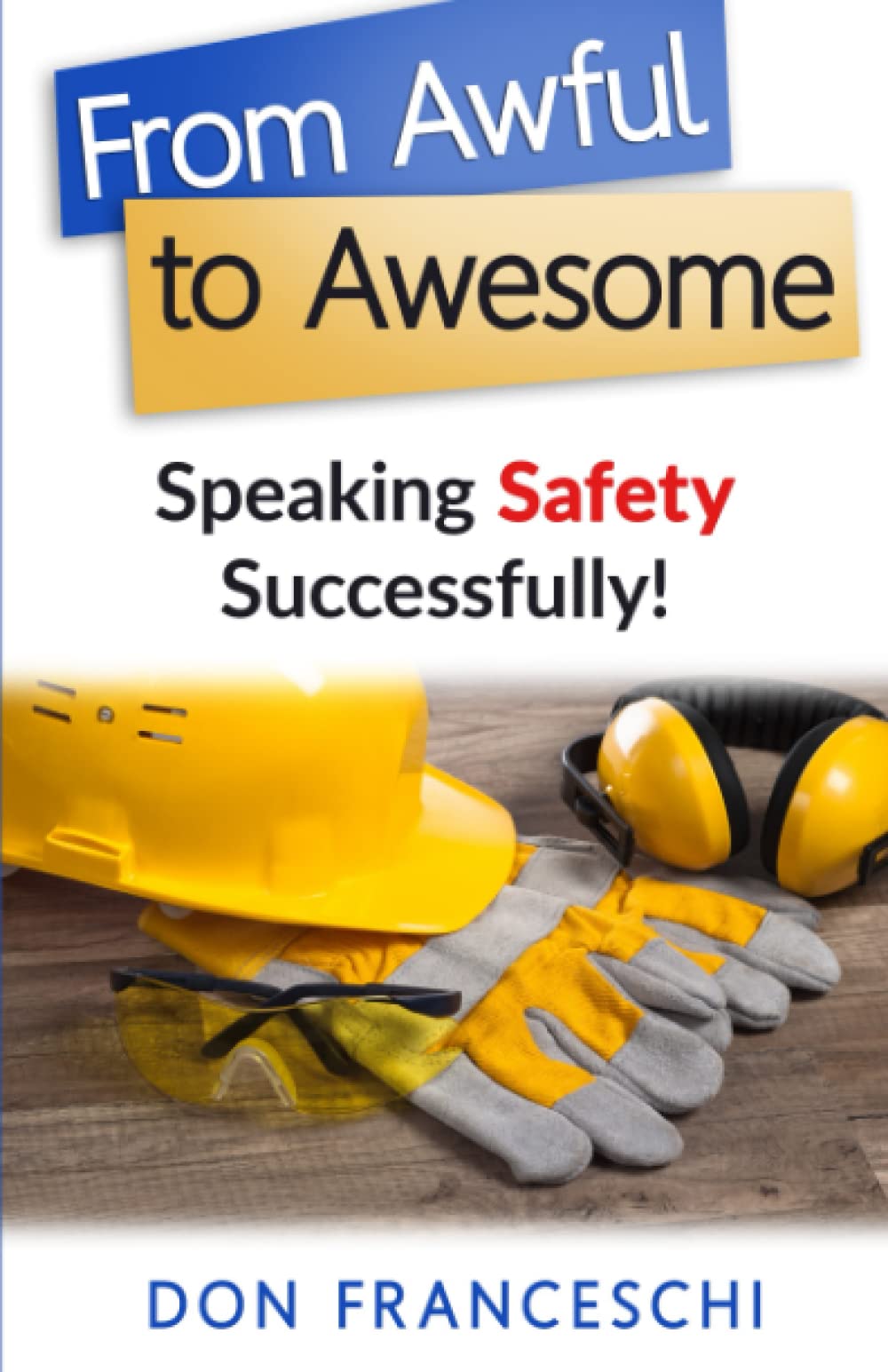
When safety training fails, the consequences are real—and sometimes irreversible. Across industries, supervisors and managers are expected to deliver safety presentations—often with little or no training on how to communicate effectively. One of the most common—and costly—mistakes in safety training is assuming that “winging it” is good enough. The result is predictable: disengaged employees, unclear expectations, and safety messages that don’t stick. After decades working in loss prevention and workplace safety, I’ve seen this pattern repeat itself in organizations of every size. From Awful to Awesome: Speaking Safety Successfully! is a practical, field-tested guide to improving how safety messages are prepared, structured, and delivered—so they actually make an impact. Drawing on nearly 30 years in workers’ compensation and loss prevention—including serving as a Regional Loss Prevention Manager leading safety consultants across Northern California—this award-winning book is organized into five practical sections designed for real-world application: - Getting Started – Establishing a common foundation and shared expectations - Presentation Preparation – Doing the upfront work that determines whether a safety message succeeds or fails - Structure & Content – Organizing safety information for clarity, consistency, and retention - Delivery – Communicating safety messages effectively in both in-person and virtual environments - Bonus Tips – Additional techniques to raise the overall quality of safety communication This book is ideal for safety professionals, supervisors, managers, HR leaders, and organizations looking to improve the effectiveness of their safety training programs. This book can be used as a shared reference to help supervisors deliver more consistent and effective safety messages. Effective safety training isn’t about “winging it.” It’s about communication that reduces risk, improves compliance, and protects people. For organizations serious about safety, how the message is delivered matters just as much as what is delivered.