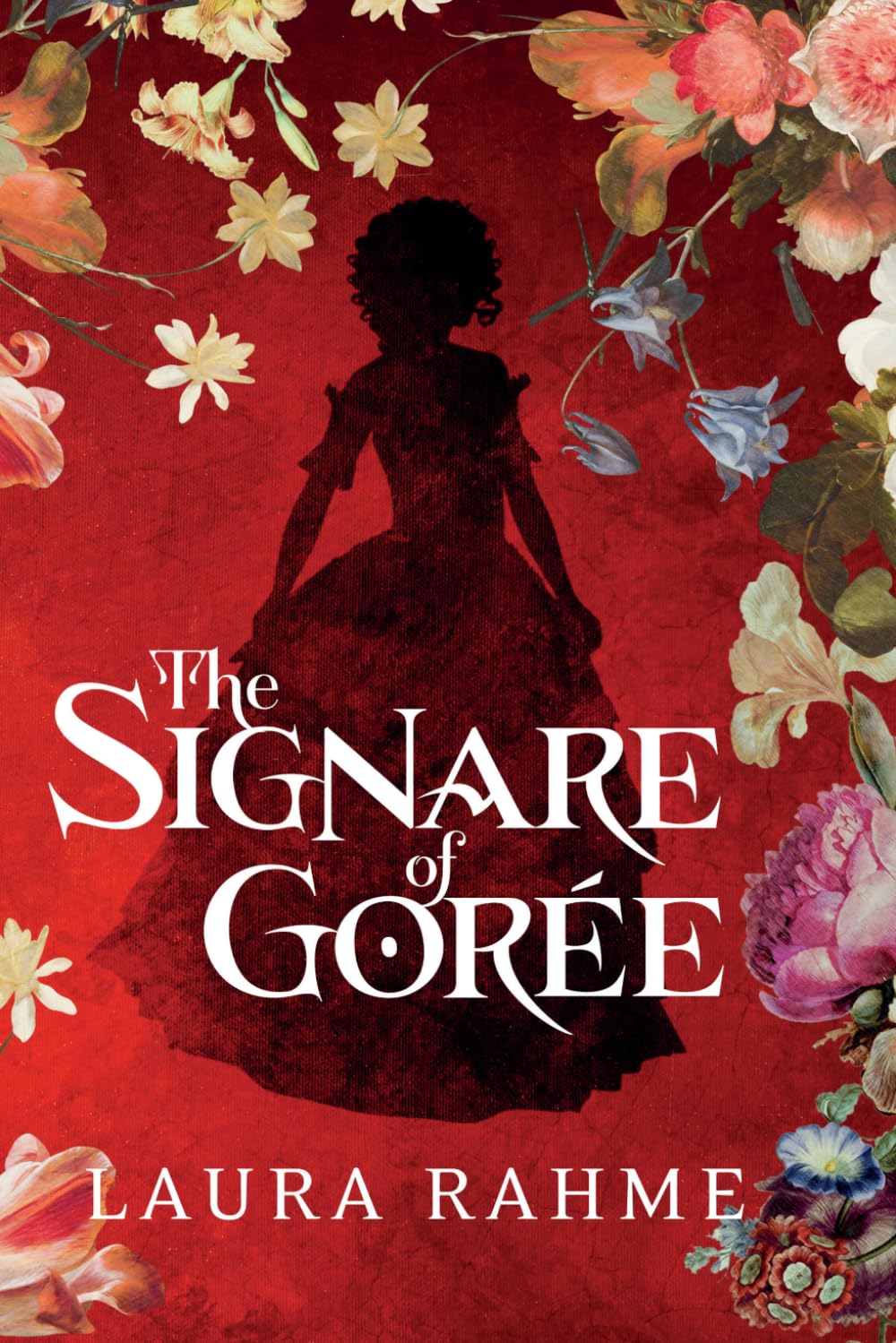
An Agatha Christie style mystery meets Isabel Allende. 1846. In the heat of West Africa, the French navy uncovers the corpses of two French soldiers. Inspector Maurice Leroux arrives at the island of Gorée. It seems death has come to this small colonial outpost off the Senegal coast, home to the prosperous mixed-blood women known as the signares. The navy suspects that the Bambara people, emboldened by approaching emancipation, may be out for blood. While confronted by the locals’ strange magical beliefs, Maurice remains skeptical. Does malevolence play a part, or are these deaths accidental, brought upon by the brutality of nature in an island known as the white man's grave? But when murder strikes, it becomes clear that a killer is stalking Gorée. Swept by a mystery unlike any he has known, Maurice meets Signare Angélique Aussenac. The proud métis, deserted by her wealthy Bordeaux lover, casts her spell upon Maurice. But beyond the throbbing sounds of the tam-tams and the glittering signare soirées, danger lurks. Someone is watching. And the deaths go on. Could the killer be one of the rich Bordeaux merchants? Or are they hiding among the powerful signares? A historical mystery spanning France and Sénégal, The Signare of Gorée explores a world of magic, murder, and passion. "A compelling mystery dripping in ancient culture and superstitions, the land of Goree and its people swept evocatively across the pages, as Rahme demonstrates her mastery of story-telling." - Top NetGalley Reviewer "Conjuring a haunting page in Gorée's history, Laura Rahme weaves folklore and a touch of magic realism into an often harrowing but always riveting tale." - SP Krause, Award-winning screenwriter "If you enjoy murder mysteries and want something that has all the ingredients of a good one, plus a really original setting, look no further. It's also essential reading for anyone with an interest in this part of Africa or period of history." - NetGalley Reviewer "Murder mysteries are ten a penny, but this one stands out for its unusual setting and historical context.' - NetGalley Reviewer "The novel is set against the rich historical backdrop of Gorée Island, and Rahme does an excellent job of bringing this unique setting to life. The vivid descriptions and historical details were definitely a highlight for me, immersing me in a time and place that I knew little about before." - NetGalley Reviewer, librarian "Born in Senegal like my father, I dearly wanted to write a novel set on the island of Gorée. From an early age I had been fascinated by its past. For four centuries, Africa's western coast served as ports of departure for slave trading ships bound for the American continent. Unlike what you might have heard, the island of Gorée off the coast of Senegal was not the largest slave exporting center in Africa. That title goes to the Kingdom of Loango which stretched across parts of modern Angola and Congo. Playing a lesser role in Senegal's human traffic, Gorée was nevertheless home to one of many concentration camps where slaves were held and readied to be shipped to the Americas, embarking on a harrowing sea passage where only an average sixty percent would survive. Other exporting locations in Senegal included the island of Saint-Louis, Rufisque, Karabine, and Ziguinchor. I beheld this tragic historical past, but I could not find a story I liked to go with it. Then ten years ago, I stumbled across an online article about the powerful female traders who lived in both Gorée and Saint-Louis. Of mixed blood, bearing a title derived from the Portuguese word, senhora , which means lady, these signares came from a world that has long vanished. Captivated by these women who ran businesses and were so independent in many ways, I promised myself that I would write a novel that featured signares. When I began writing The Signare of Gorée in 2022, I chose to feature the signare whose villa, still visited today, has made her famous all over the world: Anna Colas Pépin. In 2013, Barack Obama himself had visited Anna Colas Pépin's house. Yet he, along with many who are not aware of the ' captiveries' or official slave holding establishments that existed on the island - notably in its old military forts, see the house as the main slave holding place from which captives departed Gorée, and call it, 'The House of Slaves'. With this in mind, I was keen to bring Anna Colas Pépin to life. Things were working out. I had my setting, and I had my signares. But what I most wanted for this historical mystery was a cultural beat, a magic realism flavor of the brand I had tasted with stories like Isabel Allende's The House of the Spirits . All my novels weave in a touch of the supernatural. Even my French chef biopic, The Secret of Chantilly , plays with fairy tale elements and often blurs the lines between reality and the wondrous realm. For The Signare of Gorée , I dearly wanted to highlight Senegalese folklore. My aim