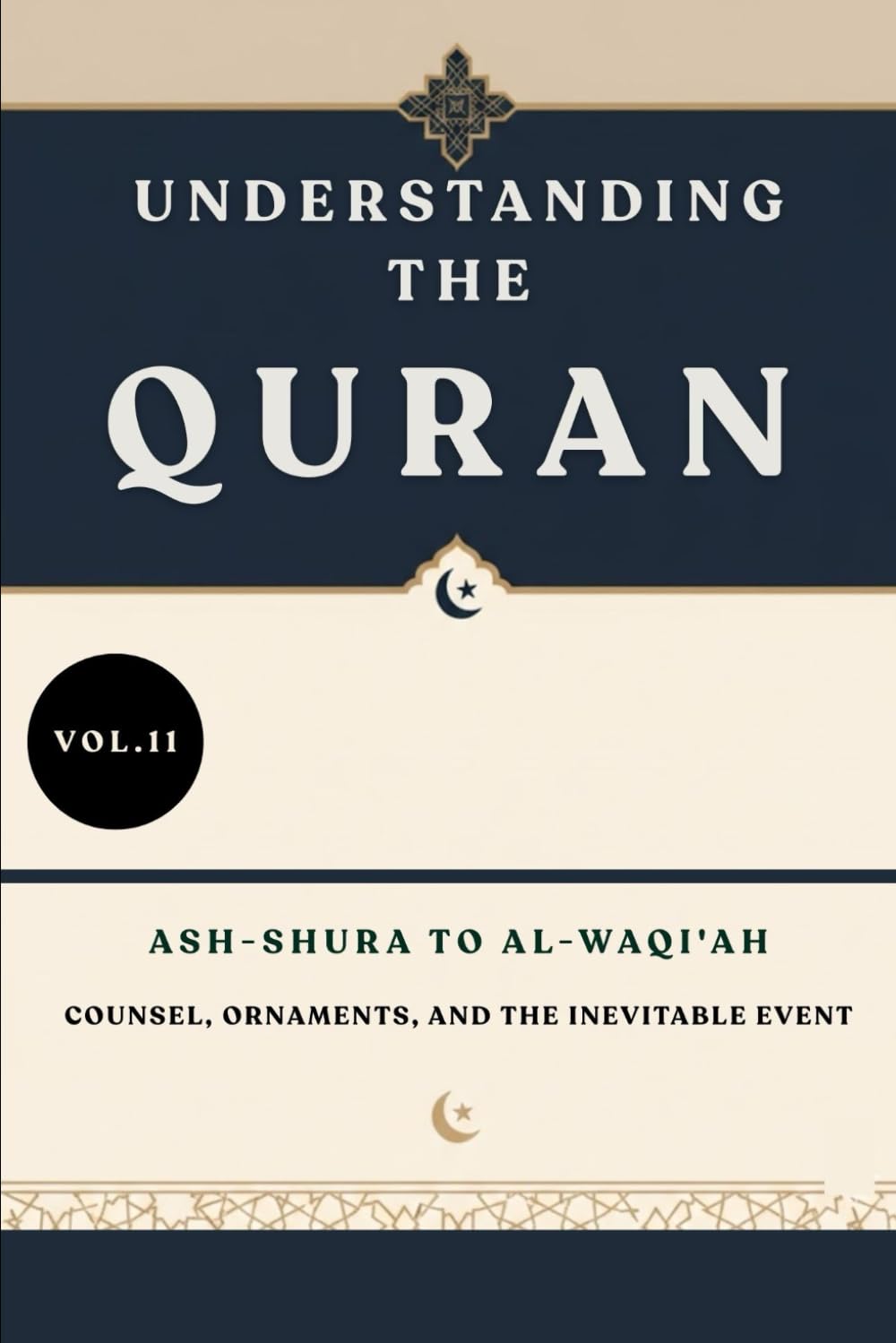
For readers seeking authentic understanding of Islamic scripture beyond superficial summaries This meticulously researched volume examines Surahs 42-56 of the Quran through classical Arabic historians—Al-Tabari (839-923 CE), Ibn Khaldun (1332-1406 CE), and Al-Ya'qubi (died 897 CE). Unlike contemporary interpretations that sanitize or oversimplify, this work presents the historical, theological, and social contexts that shaped early Islamic civilization during the critical Medinan period (622-632 CE). What sets this analysis apart: The Treaty of Hudaybiyyah (628 CE) as strategic patience transforming apparent defeat into victory - The Battle of Badr (624 CE) as documented military engagement with verified tactical decisions - Consultation principles in Surah Ash-Shura applied to traceable Medinan governance structures Twelve comprehensive chapters address: Consultation practices in Islamic governance - Material wealth's spiritual dangers - Creation and resurrection arguments - The 'Ad civilization's archaeological evidence - Defensive warfare ethics - Strategic compromise at Hudaybiyyah - Social ethics - Natural phenomena as theological evidence - Prophetic revelation mechanics - The moon-splitting incident - Divine mercy through creation - Resurrection and judgment This volume serves scholars requiring rigorous documentation, students building foundational knowledge, and readers who recognize that genuine understanding demands engagement with primary sources and classical scholarship.