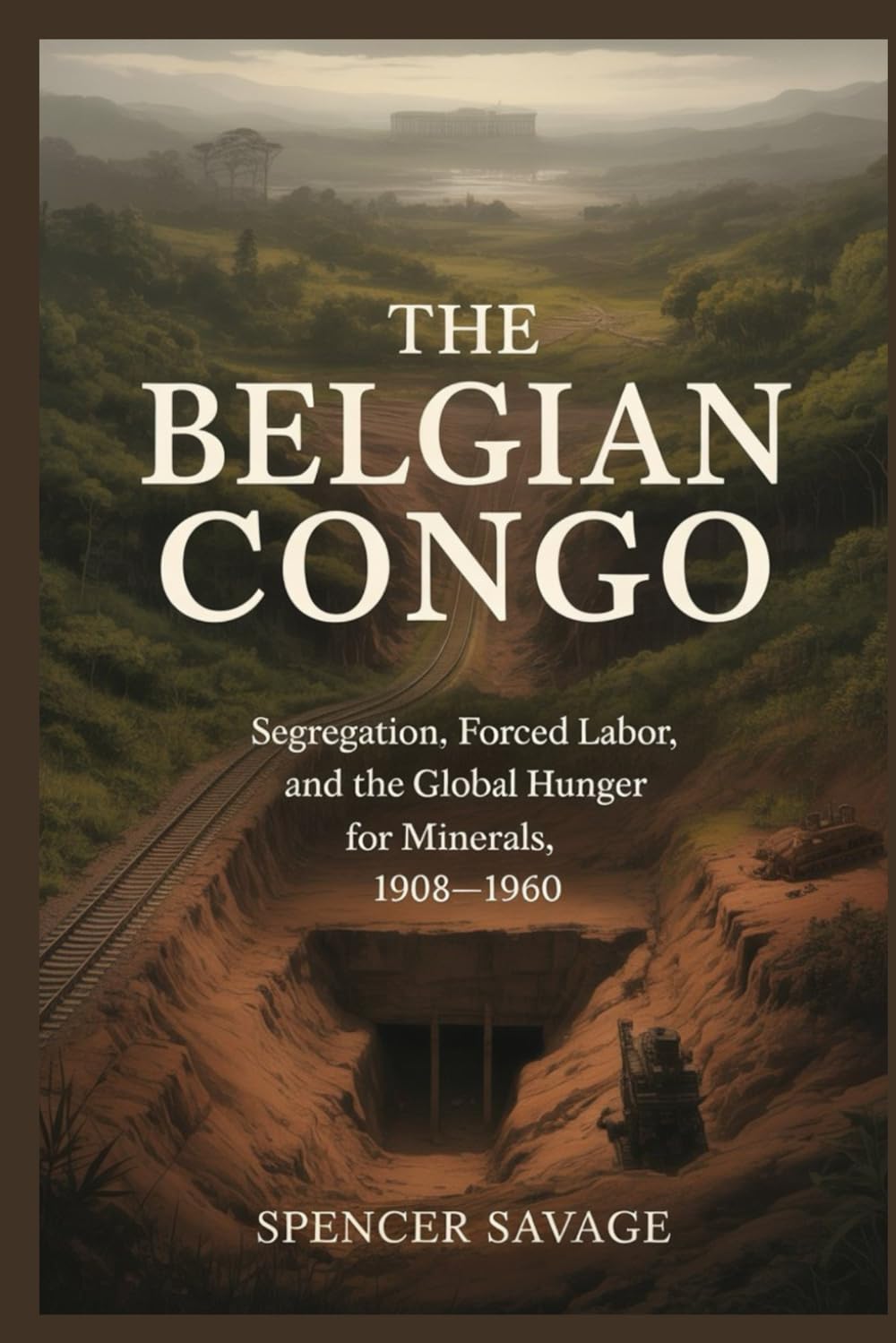
What if the greatest crime of colonialism was not just brutality, but how quietly it was normalized? The Belgian Congo strips away the polished myth of reform and exposes a system built not to govern, but to extract. From the moment Belgium took control in 1908 to the rushed independence of 1960, this book reveals how violence did not end. It evolved, refined itself, and hid behind law, bureaucracy, and silence. Few people know that the Congo was never meant to become a nation. It was engineered as a machine. Railways existed to move minerals, not people. Schools trained obedience, not leadership. Peace was learned behavior, enforced through control rather than consent. What you’re about to discover will change how you see colonial “order” forever. Through a gripping narrative lens, this book shows how forced labor replaced open terror, how racial segregation shaped daily life, how Congo’s minerals fueled global power, and how independence arrived without the foundations needed to survive it. The hidden truth behind post-independence chaos is not failure. It is design. This history matters now more than ever. To understand the Democratic Republic of Congo today, its struggles, its wealth, and its wounds, you must understand the system that shaped it. Readers interested in African history, colonialism, global power, and the roots of modern instability will find this book both unsettling and essential. This is not a story of a broken country. It is the story of a country never allowed to be whole. Ready to uncover the truth? Get your copy today and start the journey. ⭐ ⭐ ⭐ ⭐ ⭐ This book dismantles the long standing myth of the Belgian Congo as a benevolent colonial project with precision and restraint. The author shows how violence was not abandoned but reorganized, hidden behind administration and law. It is one of the clearest explanations I have read of how colonial systems persist beyond formal rule. Dr. Alain Mbala, Professor of African History, University of Kinshasa ⭐ ⭐ ⭐ ⭐ ⭐ What makes this work exceptional is its refusal to sensationalize. The power lies in its calm, relentless clarity. Extraction, segregation, and control are shown as deliberate systems, not accidents of history. This is serious scholarship written with rare narrative discipline. Prof. Marianne De Vries, Colonial Studies Scholar, Leiden University ⭐ ⭐ ⭐ ⭐ ⭐ I found this book unsettling in the best way. It forces the reader to confront how "order" was manufactured and at what cost. The chapters on labor and infrastructure are especially strong, showing how development was never meant to serve Congolese society. Dr. Samuel Okoro, Political Economist and Author ⭐ ⭐ ⭐ ⭐ ⭐ This is a vital contribution to understanding Central Africa's modern crises. The author draws a direct line between colonial governance and post independence instability without simplifying or excusing. It should be required reading for anyone studying African state formation. Prof. Helen Richardson, African Politics, SOAS University of London ⭐ ⭐ ⭐ ⭐ ⭐ I have taught colonial history for over twenty years, and few books explain continuity as effectively as this one. It makes clear that independence did not fail on its own. It inherited failure by design. The analysis is rigorous and deeply humane. Dr. Paul Van der Linden, Historian of European Empires ⭐ ⭐ ⭐ ⭐ ⭐ Reading this, I was struck by how carefully the author avoids easy moralizing while still delivering a devastating indictment of colonial rule. The treatment of education and racial order is particularly sharp and will resonate far beyond Congo studies. Dr. Amina Bello, Sociologist of Race and Power ⭐ ⭐ ⭐ ⭐ ⭐ This book succeeds because it listens to what colonial silence reveals. Instead of focusing only on moments of crisis, it examines the everyday systems that made domination sustainable. It is thoughtful, grounded, and difficult to forget. Prof. Jean-Luc Moreau, Global History Researcher ⭐ ⭐ ⭐ ⭐ ⭐ I finished this book with a clearer understanding of why the Democratic Republic of Congo's challenges cannot be separated from its past. The author does not let colonialism hide behind the language of reform or progress. That honesty is rare and necessary. Dr. Chukwudi Nwoye, African Development Analyst ⭐ ⭐ ⭐ ⭐ ⭐ As someone who studies postcolonial transitions, I appreciate how this book refuses to frame chaos as cultural or accidental. It shows, patiently and convincingly, how disorder emerged from a system built without consent or sustainability. Prof. Laura Steinberg, Postcolonial Governance Specialist ⭐ ⭐ ⭐ ⭐ ⭐ I would recommend this book to historians, policy makers, and general readers alike. It bridges academic rigor and narrative clarity without compromise. The Belgian Congo is presented not as an aberration, but as a warning written into history. Dr. Thomas Kabila, International Relations Scholar