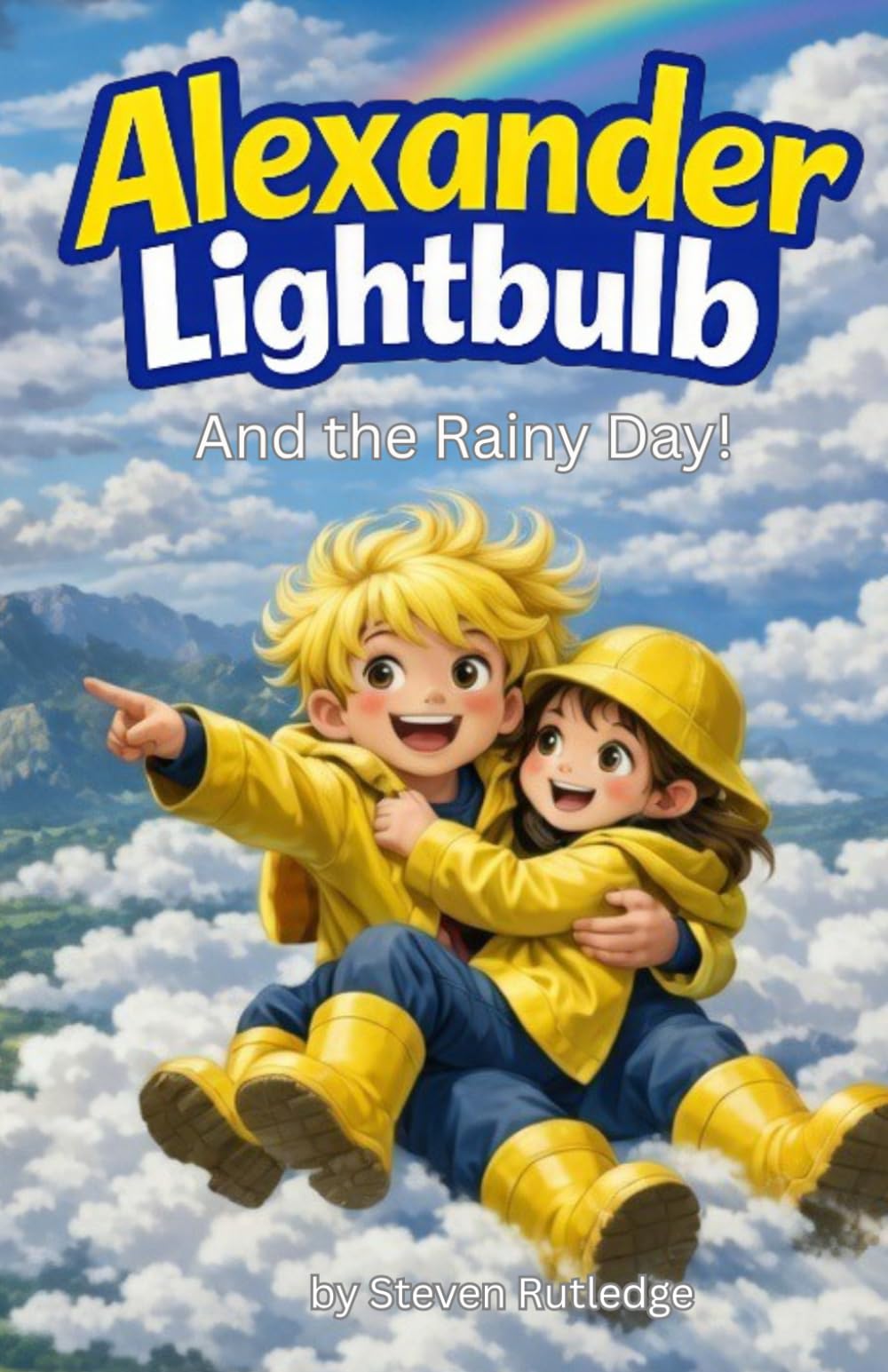
Alexander Light Bulb is a very bright boy—very bright—especially his hair. His glowing locks make perfect reading light on rainy mornings, and on this particular rainy day, Alexander is ready for one thing: a quiet room, a pile of books, and hours of reading. But rain has other plans. When his younger sister Lilly toddles in, disappointed that she can’t play outside, Alexander decides to show her something wonderful: how weather really works. With a flash of glowing hair and a spark of imagination, he brings them both into the heart of a storm—literally. Together, Alexander and Lilly rise into the sky to explore: Rain and the Water Cycle — how droplets fall, evaporate, and return again - Cloud Types — from tiny wispy cirrus clouds to towering, thunder‑making cumulonimbus giants - Wind and Air Movement — what makes gusts, breezes, and stormy skies - Thunderstorms — why thunder rumbles, how lightning forms, and why we seek shelter - Snow and Ice Crystals — the surprising way cold air shapes winter weather Lilly experiences the world above the clouds for the very first time, from fluffy “cotton candy” clouds to the dark, echoing heart of a thunderhead. Alexander carefully guides her through mist, sunlight, cold winds, and a few moments of nervous clinging. Through it all, he becomes not just a teacher, but a gentle, protective big brother. By the time they return to Alexander’s bedroom—soaked, smiling, and exhausted—Lilly has a new appreciation for weather… and Alexander has a new appreciation for unexpected adventures shared with little sisters. Book Two ends with a friendly scientific epilogue that explains real‑world weather concepts in a child‑friendly way, including why it gets colder as you go up, how clouds form, what lightning actually is, and why storms are both powerful and important. Book Two: The Weather continues the Alexander Light Bulb tradition of blending gentle magic with real science, creating a story full of warmth, curiosity, sibling love, and the wonder found in everyday natural phenomena. Perfect for readers ages 5–10 , early STEM learners, classrooms, weather units, and any child who has ever asked, “Where does rain come from?”