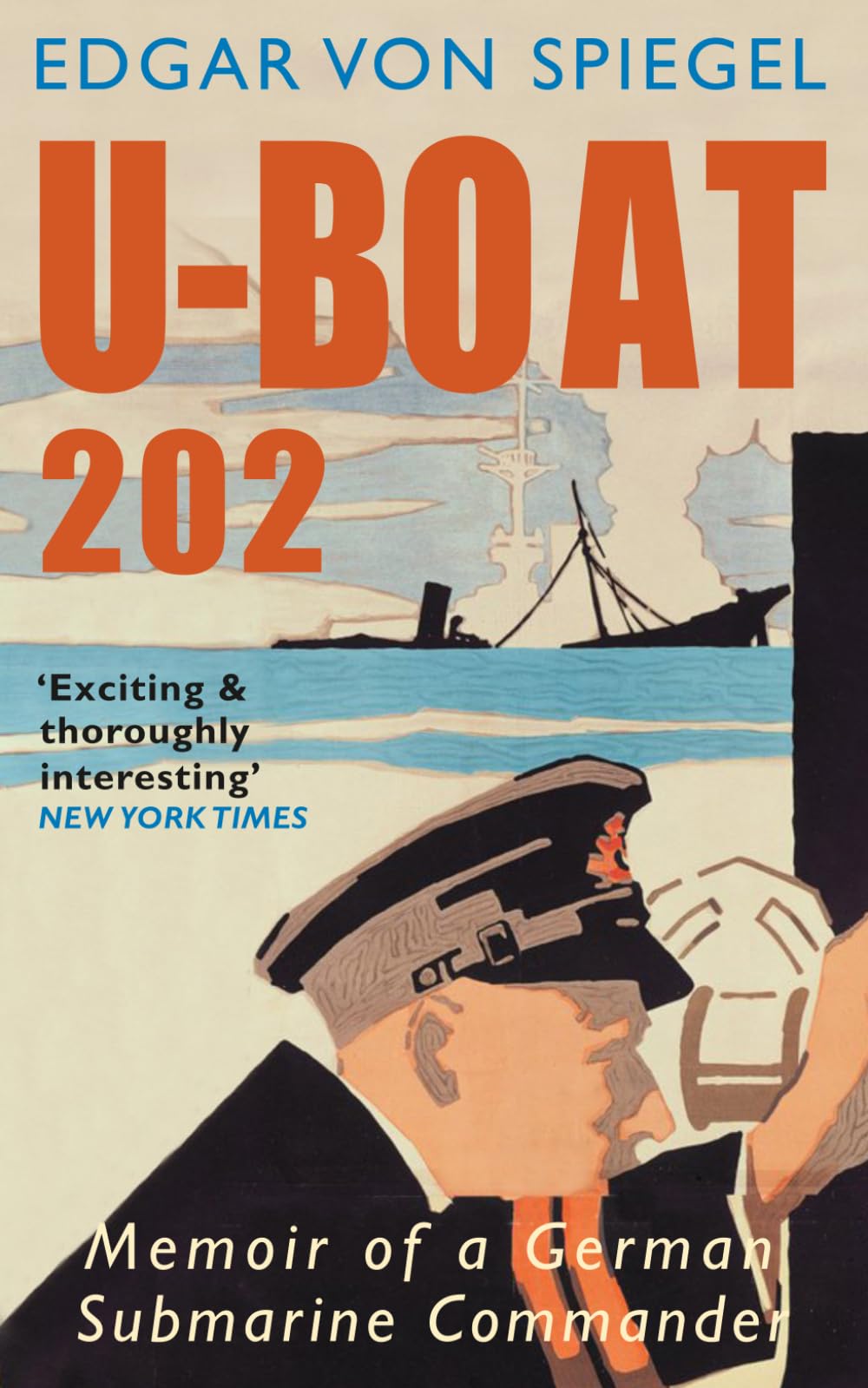
‘Exciting and thoroughly interesting’ New York Times - Memoirs by First World War U-boat aces are very rare - U-boat commander, Edgar von Spiegel, sunk 15 ships - Memoir was a bestseller in Germany during the war and has sold half-a-million copies U‑Boat 202 is a gripping first‑hand account of the Atlantic U‑boat campaign of World War I, chronicling a single, harrowing submarine patrol undertaken at the beginning of Germany’s undersea offensive, from 12 April to 30 April 1915. Told by one of the Kaiser’s sea‑wolves, Edgar von Spiegel draws the reader into a claustrophobic world of periscope watches, torpedo attacks, and split‑second decisions made from the conning tower. The narrative follows U‑202 as it battles heavy weather, sandbanks, treacherous currents, and dense minefields, while evading British Navy destroyers, torpedo boats, and Q‑ships intent on ramming the U-boat or trapping it below the surface. Seven enemy ships are torpedoed at close range, all under the constant threat of counter‑attack by the full might of the British Royal Navy. Von Spiegel’s bestselling memoir captures the relentless pressure, danger, and brutal effectiveness of Germany’s first‑ever undersea military campaign. About the Author Edgar von Spiegel von und zu Peckelsheim (1885–1965) was a German naval officer and submarine commander during World War I. Born in East Prussia, he joined the Imperial German Navy in 1903 and rose to the rank of Kapitänleutnant. During the war he commanded the submarines U-32 and later U-93, sinking fourteen ships and damaging several others in Atlantic operations. In 1917 his boat was badly damaged by the British Q-ship HMS Prize , and he was captured and held as a prisoner of war in Britain. After the war he became a writer and diplomat, later serving as German consul in New Orleans and Marseille. He wrote several naval warfare books, his 1916 memoir of his experiences in the First World War as commander of U-32 being his most successful. U-Boat 202 (U-32 was renamed U-202 for reasons of wartime security) sold over half-a-million copies worldwide and was translated from the German original into English, Norwegian, Spanish, Polish, and Italian. He died in Bremen in 1965.