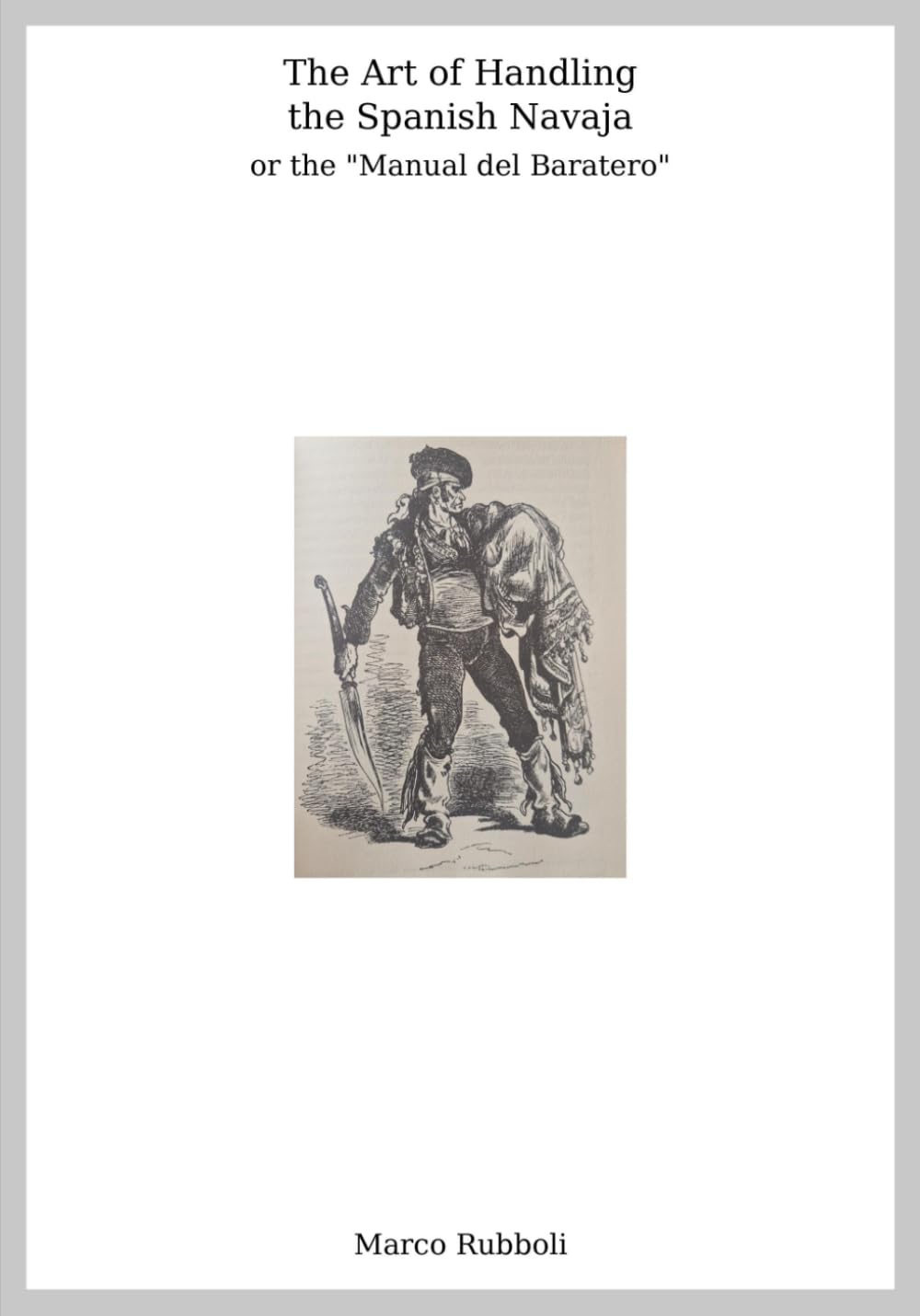
A brutal and fascinating fighting art from old Spain. In Spain between the 18th and 19th centuries, a unique system of knife fighting emerged among the gitanos and the Andalusian underworld: the art of the navaja . This book brings back to light the mysterious Manual del Baratero (1849), a rare and little-known treatise on the use of knife, dagger, and even scissors in real combat. Through duels, lightning-fast strikes, cunning tricks, and ruthless techniques, a practical and effective system takes shape—designed not for sport, but for survival. Enriched with the vivid accounts of Charles Davillier and the striking engravings of Gustave Doré , this volume offers both historical insight and practical interpretation, guided by the author’s extensive experience in historical fencing and stage combat. Marco Rubboli first translated and published the Manual del Baratero in Italian in 1994, bringing this obscure and fascinating source to a wider audience. Over the decades, he has taught this method dozens of times through seminars, individual instruction, and historical fencing courses, refining a practical understanding of its techniques and principles. His long experience as both researcher and instructor informs this work, making it not only a historical study but also a living martial tradition. Inside you will discover: The principles and guard positions of navaja fighting - Footwork, timing, and tactical movement - Strikes, feints, and deceptive techniques - Close combat, grappling, and “dirty tricks” - Historical context and cultural background A must-read for: Historical fencers (HEMA practitioners) - Martial artists and self-defense enthusiasts - Collectors and lovers of edged weapons - Readers interested in European martial traditions and folklore A ruthless art of honor, deception, and steel.