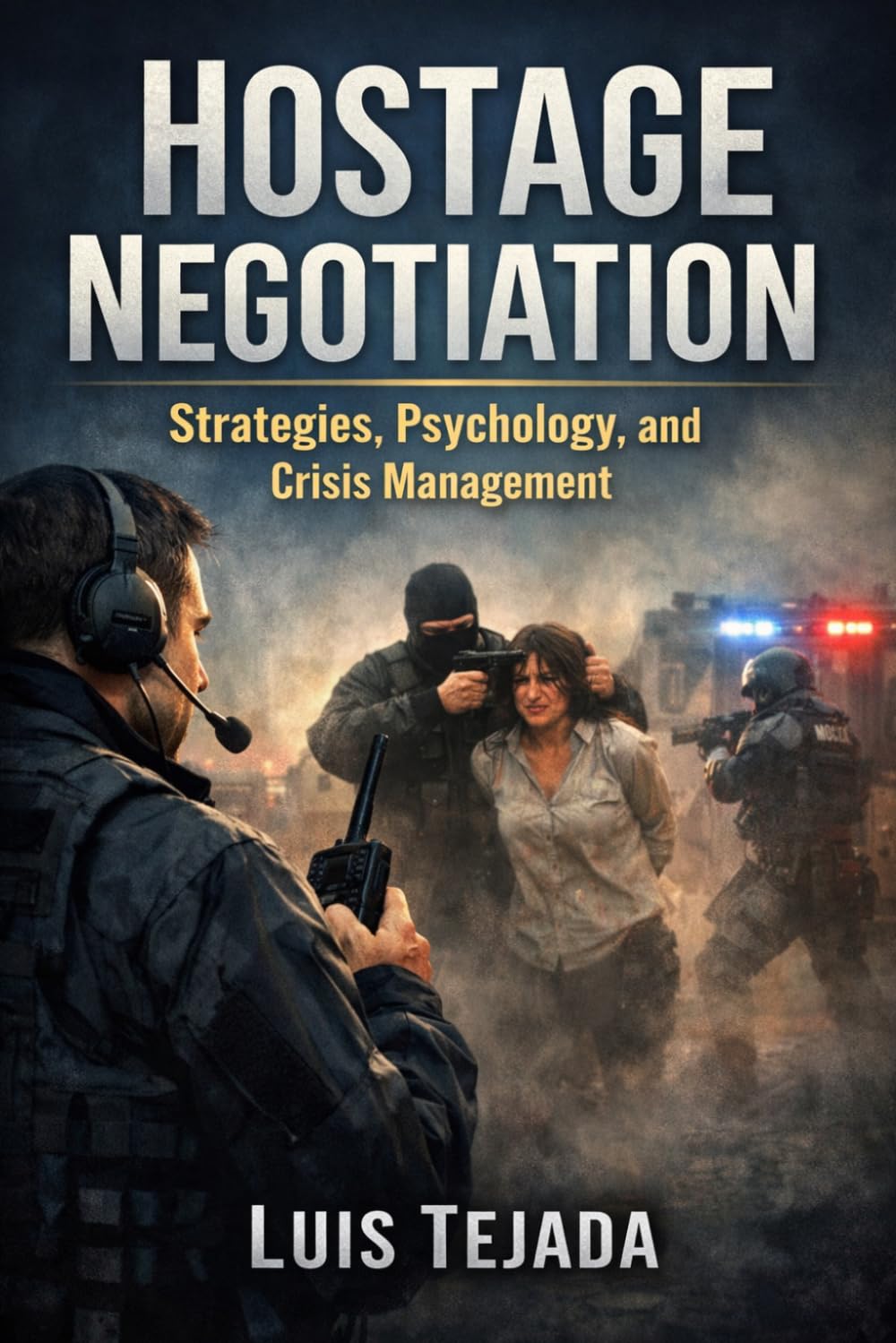
Hostage negotiation is far more than a simple exchange of words; it is a delicate art that combines strategy, psychology, communication, and a profound understanding of human nature at its most extreme. This book, “Hostage Negotiation: Strategies, Psychology, and Crisis Management,” arises from the need to provide a comprehensive guide for those who seek to understand, study, or operate in critical situations where the lives of innocent people depend on calculated decisions and the ability to influence the behavior of individuals under pressure. From its origins to the most advanced modern techniques, the history of hostage negotiation reveals the evolution of a field that has saved countless lives and contributed significantly to the understanding of human behavior in crisis contexts. Experience shows that every negotiation is unique, and that protocols and fundamental principles are not merely guidelines, but tools that—combined with creativity, intuition, and empathy—can make the difference between tragedy and peaceful resolution. Within these pages, we will explore the profile of the hostage negotiator, their training, the formation of specialized teams, and the meticulous planning that precedes any operation. We will analyze the types of hostages and the diverse situations that may arise, from conventional kidnappings to corporate or virtual scenarios, as well as the psychology of both captors and victims, seeking to understand the factors that guide decisions and behavior in moments of extreme tension. Effective communication, persuasion, and conflict resolution form the core of every successful negotiation. This book examines dialogue strategies, reverse persuasion techniques, crisis management, and decision-making under pressure. It also explores the crucial role of the media, intelligence, and ethics at every stage of the process, along with the additional challenges presented by negotiations involving terrorist groups or international contexts. Additionally, relevant historical cases are presented, along with lessons learned from situations that set important precedents and the significance of post-release preparation for hostages, addressing legal, psychological, and social aspects that affect both victims and their families. This text is intended not only for security professionals and experienced negotiators, but also for academics, students, and any reader interested in understanding the complexity of negotiation in critical scenarios. Its goal is to provide comprehensive, practical, and applicable knowledge that allows readers not only to understand the dynamics of these extreme situations, but also to appreciate the delicate responsibility involved in managing human lives under pressure. Throughout its chapters, you will discover that hostage negotiation is, at its essence, an exercise in empathy, strategy, and humanity. It serves as a reminder that even in the darkest moments, words, preparation, and understanding can become the most powerful tools for saving lives.