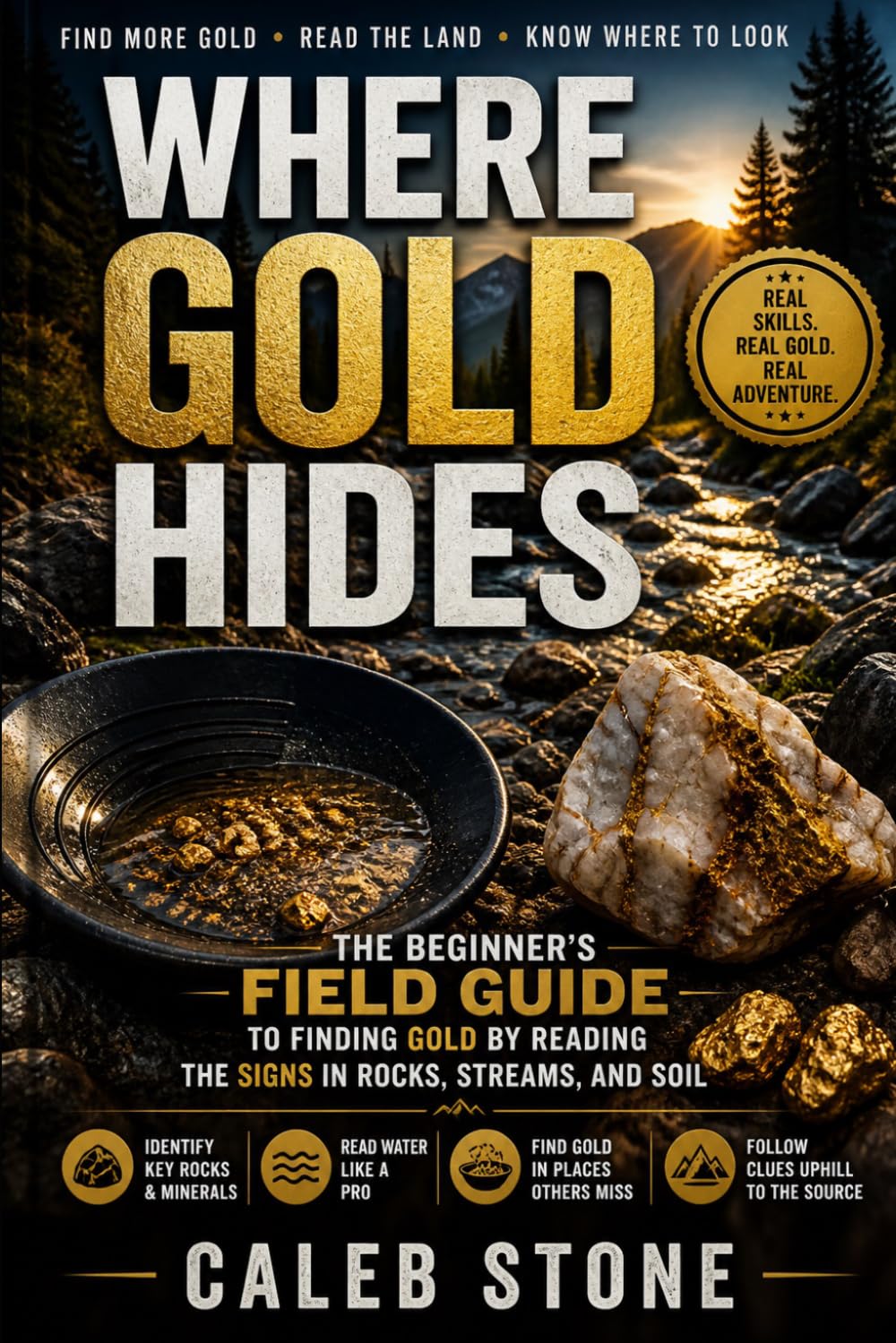
You don’t need to be a miner to find gold. You just need to know what signs to look for. Most beginners walk into a creek, scoop random gravel, pan random sand, and give up when they find nothing. But gold is not random. It moves according to weight, water, gravity, erosion, and geology. Once you learn how to read the land, an ordinary creek starts to look completely different. Where Gold Hides is a beginner-friendly field guide to finding gold by reading the signs in rocks, rivers, streams, creeks, gullies, and mountain terrain. Instead of focusing only on basic gold panning, this book teaches you how to think like a prospector. Inside, you’ll learn how to recognize the clues that may point toward placer gold, including black sand, white quartz veins, rusty quartz, iron-stained rocks, pyrite, heavy minerals, inside bends, gravel bars, bedrock cracks, packed gravel, dry washes, old stream channels, waterfall plunge pools, and mineralized hillsides. You’ll discover why gold often settles where water slows, why black sand is one of gold’s most important traveling companions, why quartz is a clue but not a guarantee, and why small cracks in bedrock can sometimes matter more than a whole bucket of loose sand. This practical gold prospecting guide also shows you how to follow clues uphill, compare test pans, avoid common beginner mistakes, stay safe around creeks and old mine areas, and understand where you can and cannot legally look for gold. Whether you are interested in recreational gold panning, creek prospecting, rockhounding, placer gold, outdoor adventure, or simply learning how to read the natural signs of gold country, this book gives you a new way to see the land. Gold leaves clues. This book teaches you how to read them.