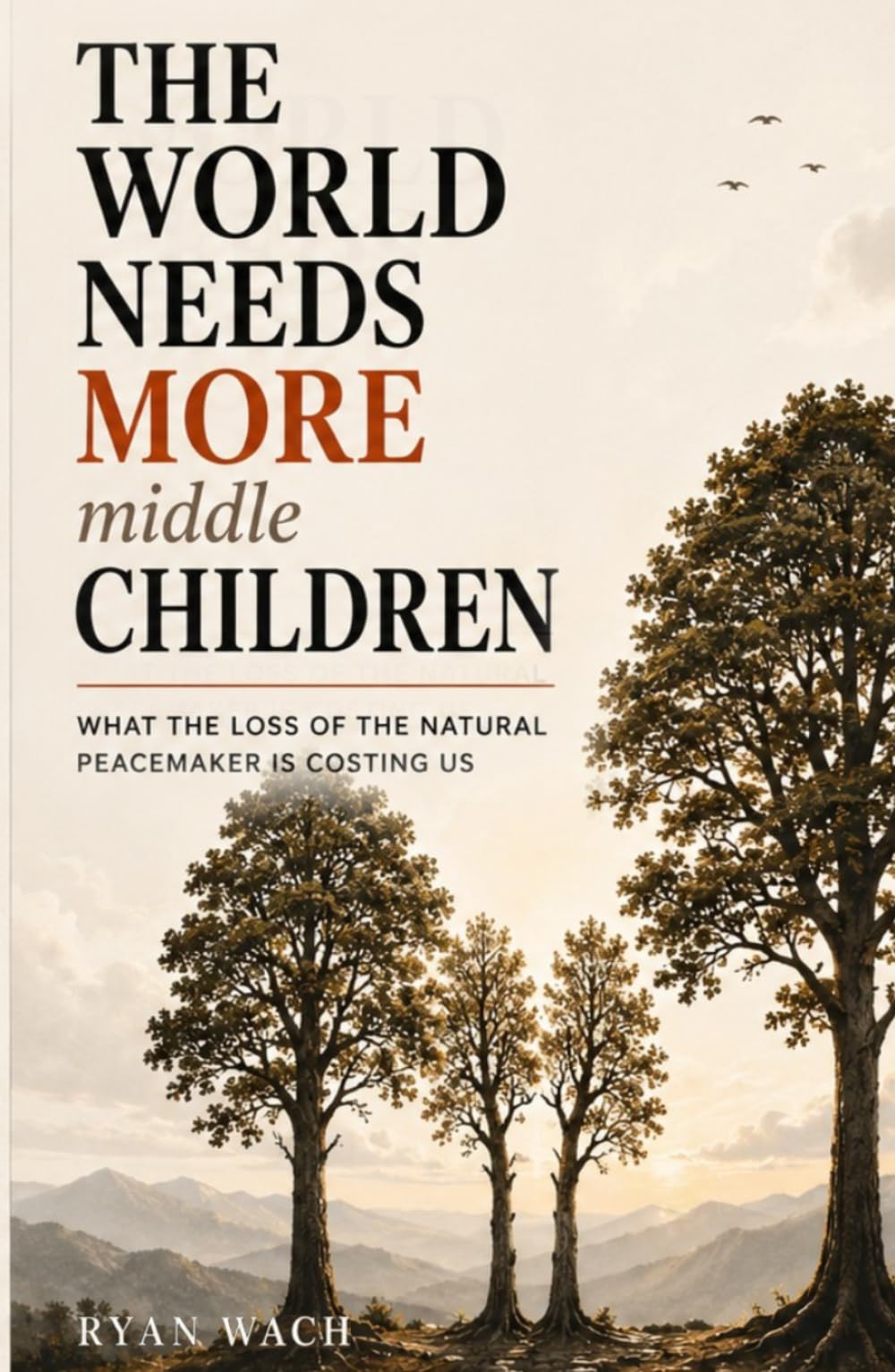
Picture a family at the dinner table. The oldest is explaining something with great authority. The youngest is performing for the room. The parents are managing the edges. And somewhere in the middle, barely noticeable, a child is doing something no one will name: reading the room, tracking what each person needs, and finding the words that keep things from coming apart. They will not be thanked. They may not even know what they did. That child is disappearing. As American families shrink toward one and two children, the middle-child position, which requires at least three, is becoming structurally impossible in a growing proportion of homes. And with the middle child goes something the family has always quietly produced: a person trained by necessity in the specific arts of negotiation, peacemaking, loyalty, and perspective-taking that make shared life actually work. In The World Needs More Middle Children, Ryan Wach makes a sweeping and surprisingly personal case that the capacities the middle position builds, including the reflex for finding common ground, the habit of holding multiple perspectives simultaneously, the deep loyalty of someone who learned friendship through genuine attention rather than charm, and the approval-independence of someone who discovered early that the world does not organize itself around any single person's comfort, are precisely the capacities that American civic and social life is running short of. Drawing on developmental psychology, personality science, and a landmark 2024 study of more than 700,000 adults, Wach connects the intimate mechanics of sibling life to the large-scale fraying of the social fabric. The argument is urgent. The voice is warm. The conclusion is honest about what we have lost and clear-eyed about what we can still choose. The World Needs More Middle Children is for parents, for anyone who has wondered why the world feels so loud, and for everyone who has ever been the quiet one in the middle, holding things together while no one noticed.