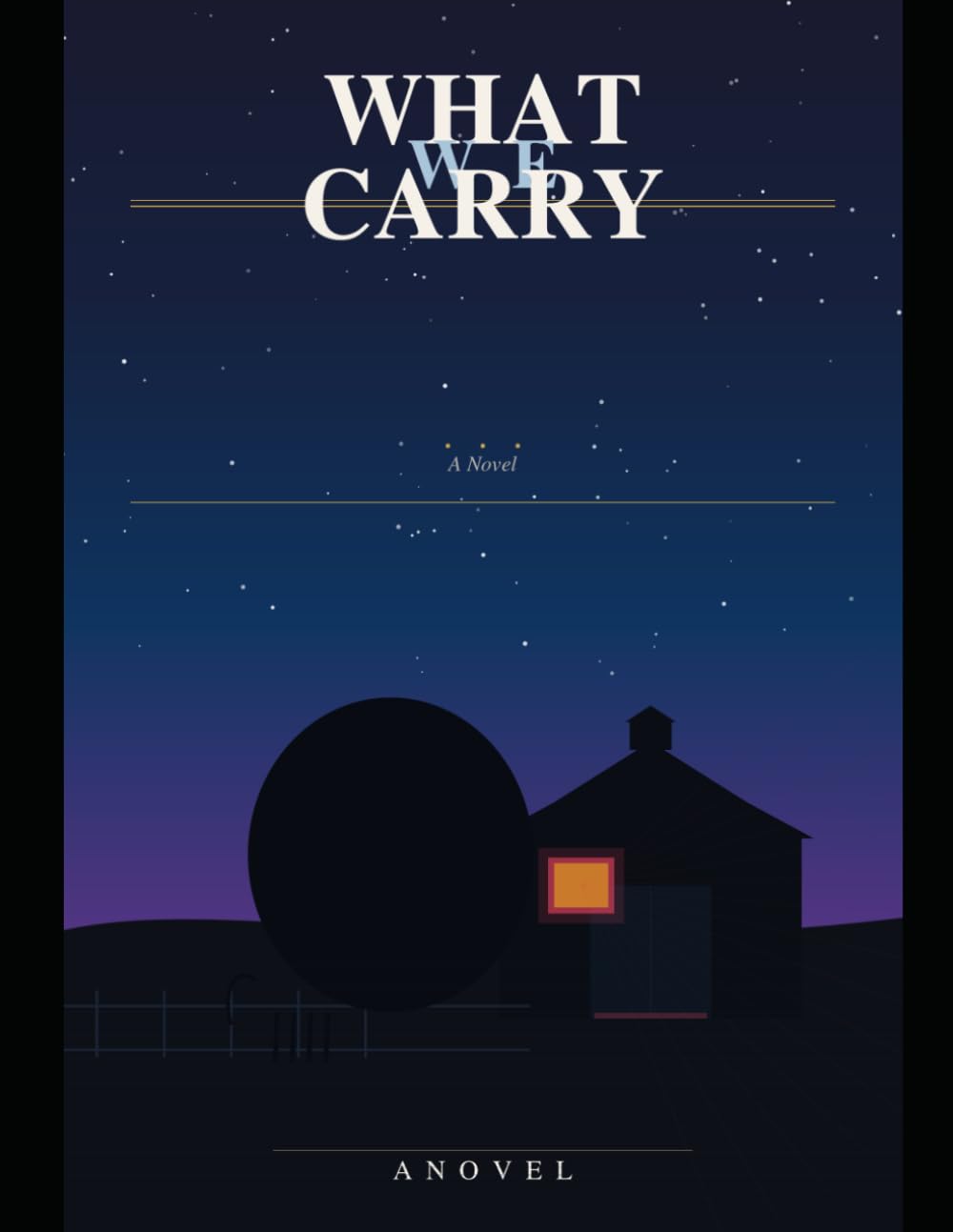
WHAT WE CARRYA NovelSummaryWhat We Carry is the story of two women — a mother and a daughter — and the long, painful, imperfect distance between them.Lucy McDonald was a child who was never protected. What was done to her she could not name, could not process, and could not stop from flowing outward into the lives of her own children. She was not a monster. She was a wounded person who wounded others, which is one of the oldest and saddest stories there is.Denise is Lucy's fourth child. From the age of seven she cooked the meals, raised the baby, kept the house running, and survived what Kevin did to her for seven years in silence, because silence was the only container that held it. At sixteen she walked out the back door in the middle of the night with eleven dollars, a cookbook, and a photograph of herself that looked like someone who might be okay. She did not look back.What follows is the life Denise builds from nothing — a husband who looks at her directly and stays, a barn she chose herself, children she raises without the belt or the hand, ever, not once. A life so deliberately constructed in opposition to everything she came from that the construction itself is a kind of portrait of what she survived.And then, late, imperfectly, the two women find their way back toward each other. Not to resolution. Not to the clean forgiveness that stories are supposed to end with. But to something true — coffee on Tuesday mornings, a horse breathing warm air into an old woman's palm, a healthcare proxy form signed in a nursing home room, and finally, at eighty years old, three words Lucy owed her daughter for fifty years.This is a novel about what damage does when it is passed from hand to hand down through generations, and what it costs — and what it takes — to be the one who stops it. It is about the difference between the mother who hits and walks away and the mother who hits and turns around and says I'm sorry, that was wrong, I should not have done that — and why that difference is everything.It is about carrying. And about what you set down. And about the barn, you build yourself, so you have somewhere to go on the hard days and come back in steadier.