

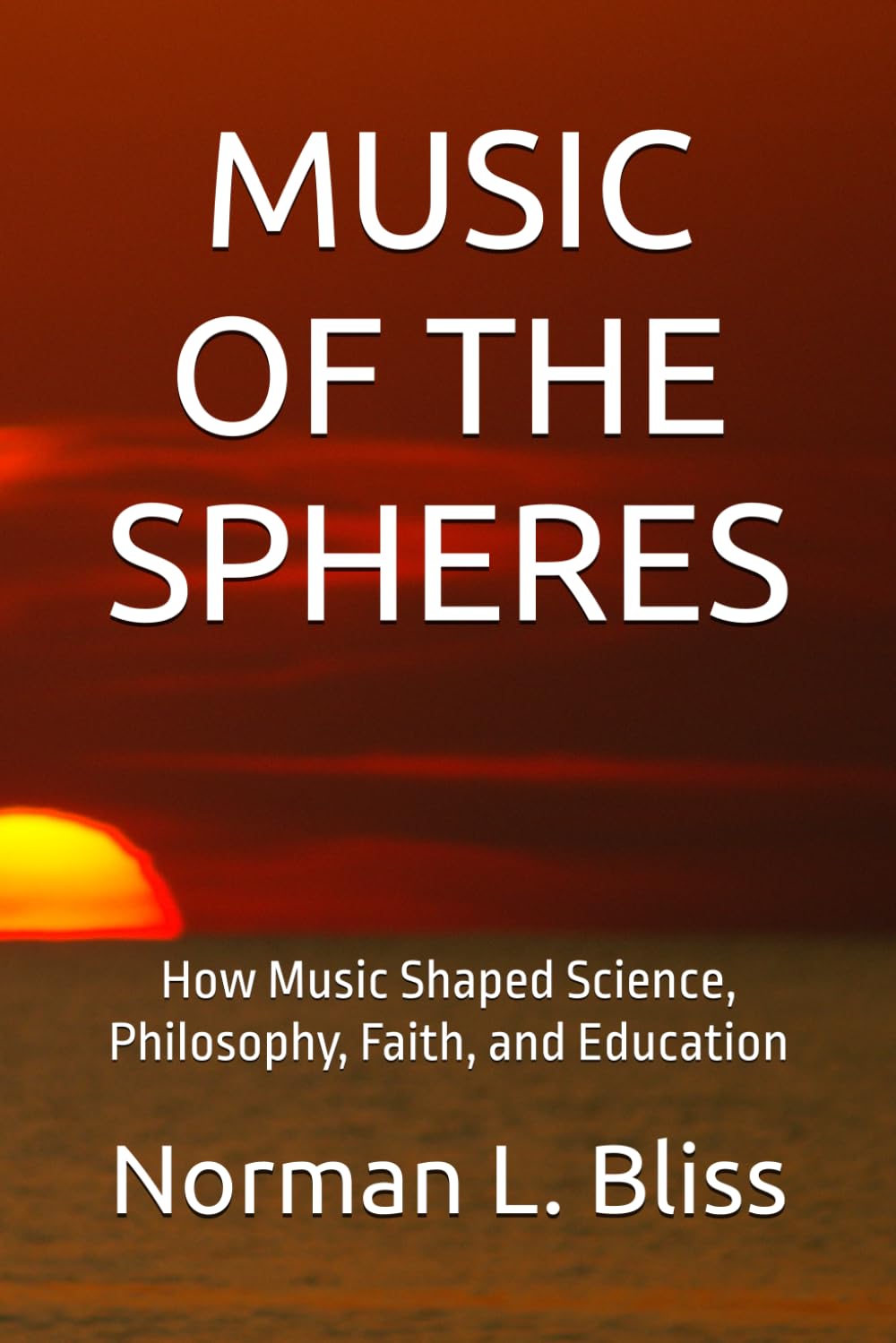
Music has always been more than just sound. Long before humans had science, philosophy, or schools, they had rhythm, voice, and harmony. People sang before they could write. They played instruments before they could explain why the sounds worked. In that sense, music may be one of the first ways humans tried to understand the world. This book starts with a simple idea: music did not just entertain humanity it helped shape how we think. Across history, music has been connected to some of the biggest human questions. Why does the universe feel ordered instead of random? Why do certain sounds feel peaceful while others feel tense? Why does music affect emotions, memory, and belief so deeply? These questions pulled music out of the background and placed it at the center of science, philosophy, faith, and education. One of the first people to take music seriously in this way was Pythagoras. He discovered that harmony follows mathematical ratios and concluded that the same order found in music must also exist in nature and the universe. From this came the idea of the Music of the Spheres the belief that the cosmos itself moves according to harmony and number. Whether taken literally or symbolically, this idea shaped how humans understood reality for centuries. Philosophers like Plato and Aristotle argued that music shapes character and emotion. Religious traditions used music to express worship and reach beyond words. Scientists later discovered that music follows strict physical laws of vibration and frequency. Educators eventually brought music into public schools, believing it formed better, more balanced human beings. Even today, neuroscience confirms that music activates the brain in ways few other activities can. Yet, despite all this, music is often treated as optional or unnecessary. School music programs are cut. Music is reduced to background noise or entertainment. The deeper role it has played in shaping human thought is mostly forgotten. This book argues that this is a mistake. By tracing music’s role from ancient philosophy to modern science, from faith traditions to public education, Music of the Spheres shows that music has always been a bridge between reason and emotion, order and meaning, the physical world and the human soul. Music reveals that humans are not just thinkers, but listeners; not just observers of the universe, but participants in its patterns. This is not a technical music textbook, and it is not a religious argument disguised as art. It is an exploration of how sound became understanding, how harmony became meaning, and how music quietly shaped the way humanity sees itself and the universe it lives in. In the chapters that follow, we will see that music is not something added to human life after the important things were figured out. Instead, music was there from the beginning helping us discover that the universe, like a well-tuned instrument, is held together by patterns, balance, and harmony. And once you begin to hear that, it is hard to unhear it.
| Gtin | 09798242412996 |
| Age_group | ADULT |
| Condition | NEW |
| Gender | UNISEX |
| Product_category | Gl_book |
| Google_product_category | Media > Books |
| Product_type | Books > Subjects > Arts & Photography > Music |