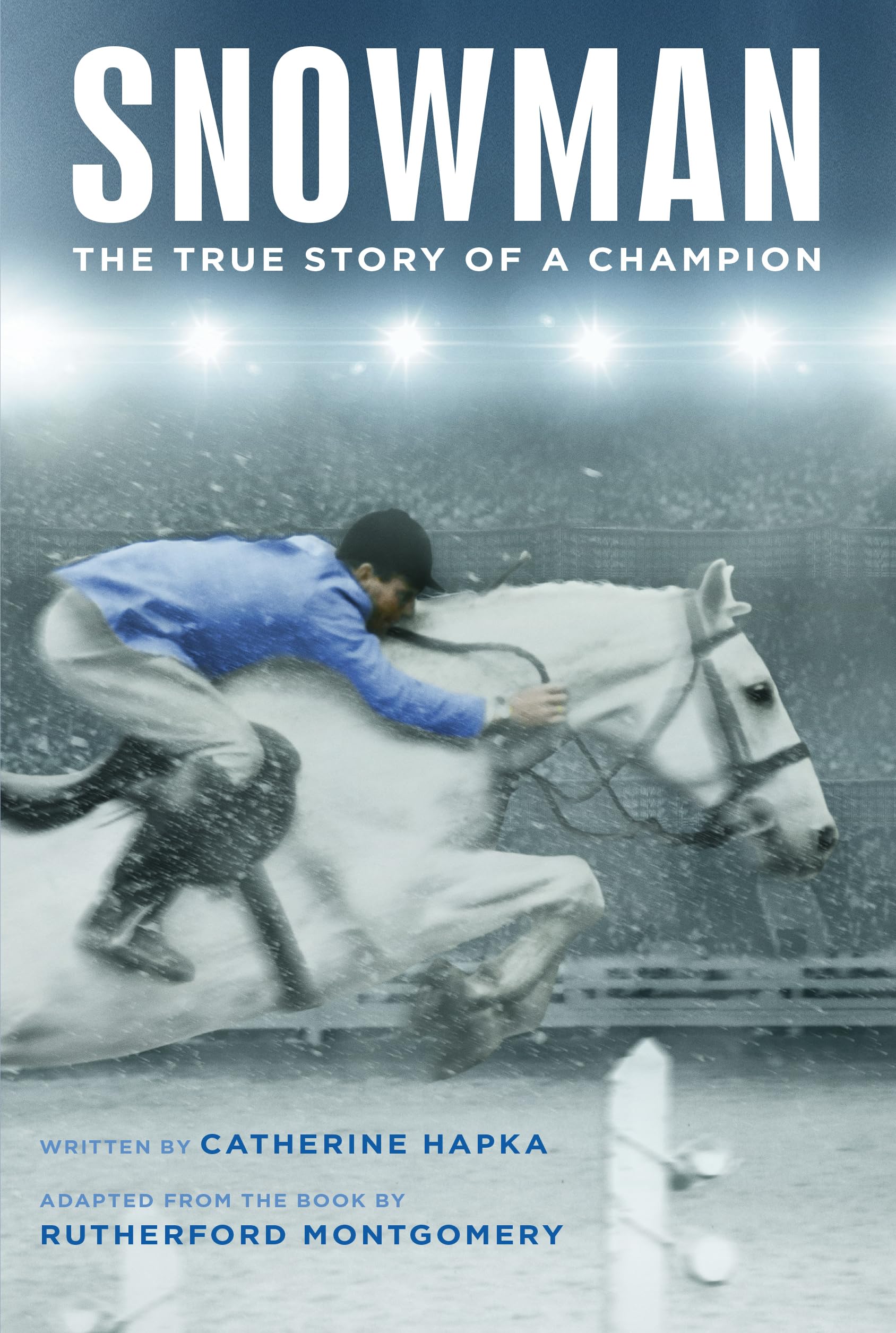
A chance meeting between a riding instructor and a run-down horse unveils a hidden talent and sparks a remarkable rise to fame in this nonfiction illustrated middle grade book by the author of the Marguerite Henry’s Ponies of Chincoteague series. Snowman, an Amish plow horse, was bound for the meat market when Harry deLeyer, a Long Island riding instructor, spotted him at auction. After making eye contact with the gentle giant, deLeyer decided to purchase him for eighty dollars. At first, Snowman was just a horse that children rode during lessons, but when deLeyer sold him to a neighbor, the horse had other ideas. He would jump the high fences so he could return home. Harry then began training Snowman as a show jumper. Less than two years out of the plow fields, Snowman won the 1958 horse show jumping Triple Crown—the American Horse Shows Association Horse of the Year, Professional Horseman’s Association Champion, and Champion of Madison Square Garden’s Diamond Jubilee. Snowman was inducted into the Show Jumping Hall of Fame in 1992. Catherine Hapka has written more than one hundred books for children and adults. She has written for series as a ghostwriter and has also authored original titles. She lives in Pennsylvania. Rutherford George Montgomery (April 12, 1894–July 3, 1985) was the author of many books about animals, worked as a scriptwriter for the Walt Disney Studios, and taught creative writing. Snowman CHAPTER 1 February 1956 New Holland, Pennsylvania End of the Road “BRING THE REST IN!” A voice shouted. The gray horse lifted his head from the trough where he’d been searching for stray scraps of hay. A slender teenage boy dressed mostly in black was hurrying toward the horse’s head. “Come on, big fella,” the youth said, giving a yank to loosen the knot in the rope tying the gelding to the rail over the trough. Then he grabbed the horse’s worn halter and gave a cluck and a tug. The clip on the ratty halter dug into the horse’s face, but the gray gelding gave no protest. He was used to the small aches and pains of hard work and careless handling. The horse followed without hurrying as the youth dragged him along the aisle of the auction barn. When the gray gelding had arrived, the place had been packed with horses of all shapes and sizes, tied side by side along both walls. People had wandered along the sunken walkway in between, occasionally stepping closer to lift a horse’s hoof or to flip its lip up to look for a tattoo and to check its teeth. None of the people had bothered the gray horse, however. And now, hours later, the aisle was nearly deserted. Boy and horse turned the corner into the center part of the building, where the horse fell into step behind four others, all workhorses like him but mostly much older and stoutly built, with the thick legs and massive necks of draft animals. One of the big drafts had a badly galled shoulder, and a black gelding’s back was swayed from hard work and old age. All four showed ribs through their shaggy, unkempt coats. The gray was showing the outline of ribs as well, and clearly hadn’t been groomed in a while. But unlike the others, who plodded along without raising their heads, he looked around with interest, pricking his small ears as he passed through a gate into the narrow sales ring bordered on both sides by tall wooden bleachers. Earlier, this place had been filled with people, too. Now, only a few remained. The gray gelding met the eye of one of them, a stocky man wearing a heavy mackinaw coat and a cloth cap with the earflaps pulled down against the chill of the unheated building. But the man barely seemed to see the gray before turning to look at the rest. As the gray horse passed him, the man spat a wad of tobacco onto the ground. “Sixty a head,” he called in a raspy voice. “Sold.” Another man, sitting at the wooden desk overlooking the ring, gathered the papers lying before him. “That’s all, folks.” “This way.” The youth at the gray’s head tugged again on his halter, leading him back out of the ring with the others. “Sorry, pal, looks like it’s end of the road for you.” • • • The parking lot at New Holland Sales Stables was already clearing out when Harry deLeyer steered his station wagon past cars, horse trailers, and Amish buggies. A few people were still loading the horses they’d bought, but Harry paid little attention to them. He had been to the auction before and knew how it worked. Every Monday, all year round, people came from near and far to buy and sell horses. There, one could find anything from enormous drafts weary from pulling a plow to sleek, spirited show horses to furry ponies; from high-headed saddlebreds to Thoroughbred ex-racers to horses whose breeding was anybody’s guess. The buyers varied just as much. Amish farmers looking over the plow and buggy horses with a practiced eye. Trainers looking for a lesson horse or show horse at a bargain price. Families looking for an inexpensive pony for the k